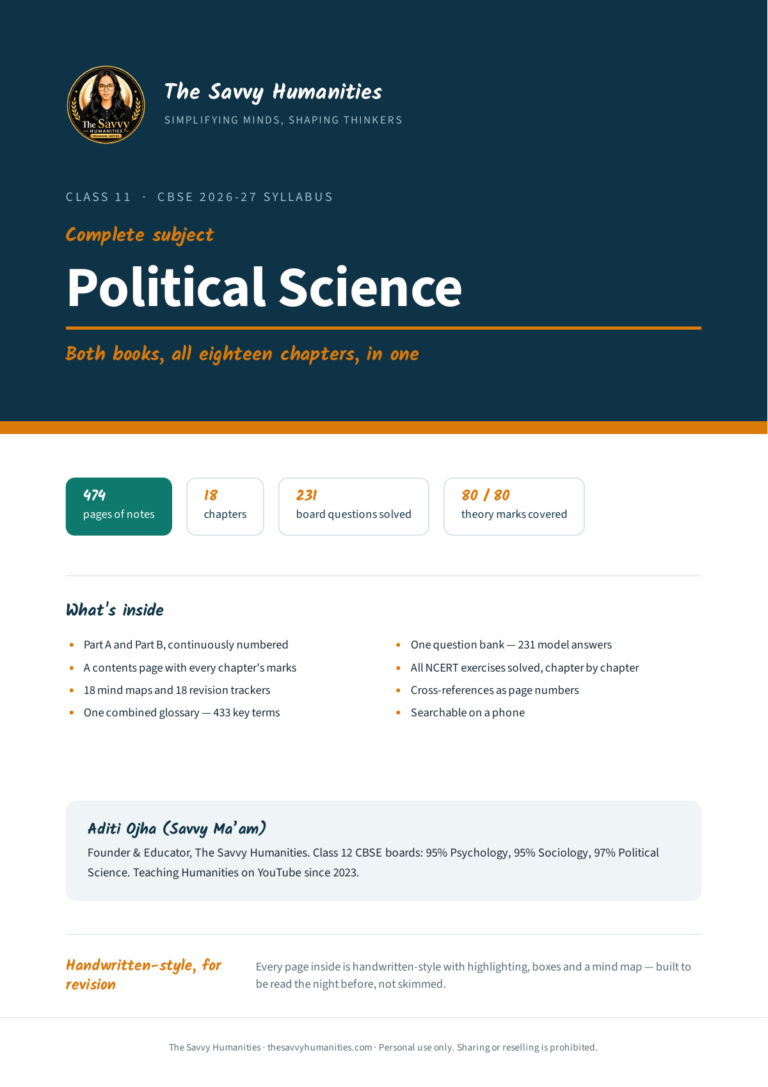
Exam-oriented handwritten-style notes — every page laid out like class notes, with highlighting, boxes and a mind map, built to be read the night before rather than skimmed.
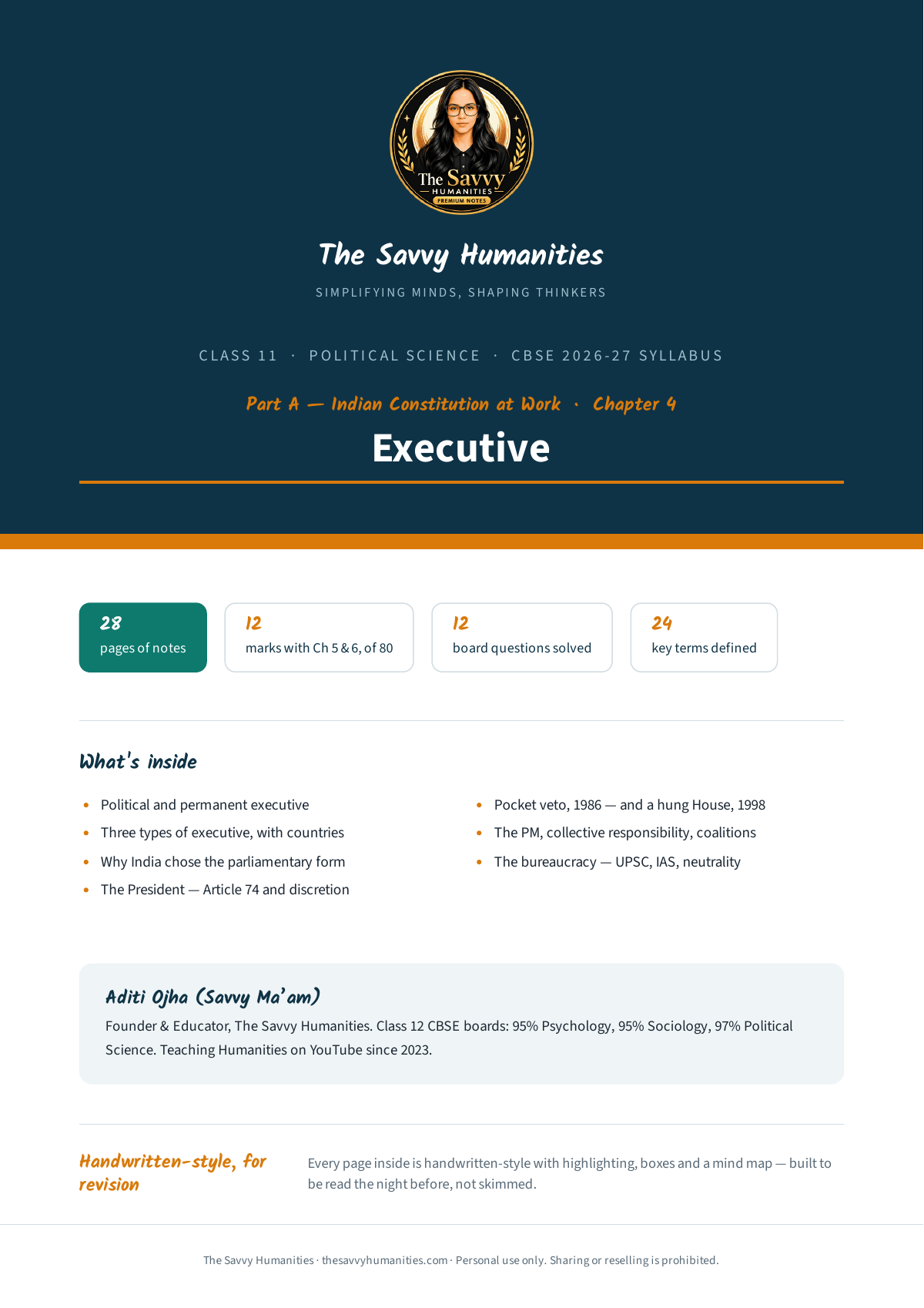
Chapter 4 of Part A, Indian Constitution at Work. CBSE marks Executive, Legislature and Judiciary together: 12 marks out of 80 for the three chapters combined. Checked against CBSE’s own 2026-27 curriculum document.
What is the difference between the political and the permanent executive?
The political executive is elected and changes with governments; the permanent executive — the civil services — stays. The notes then set out the three types of executive — parliamentary, presidential and semi-presidential — with the countries the book names.
Why did India choose a parliamentary executive?
The book’s reasons, kept in order.
What are the powers of the President?
The President acts on ministerial advice under Article 74, but keeps a few discretionary powers — with the book’s two cases: the pocket veto of 1986 and the hung House of 1998.
What is the role of the Prime Minister and the bureaucracy?
The PM, the Council of Ministers, collective responsibility and coalition government — then the bureaucracy: the UPSC, the IAS, and political neutrality.
What else is in the file
- Chapter at a glance — a one-page mind map of the whole chapter
- A 24-term glossary of every definition the paper can ask for
- 12 questions solved with full model answers — board-pattern questions and NCERT exercises, 1, 2, 4 and 6 markers
- A revision tracker to tick off each topic as read, practised and revised
The file
- Format: PDF, A4 — works on a phone and prints cleanly
- Length: 28 pages plus cover
- Delivery: instant download link after payment, plus a copy by email
- Free updates: if CBSE changes the syllabus or a correction goes in, the updated file is sent to you at no cost. You never pay twice for the same chapter.
By Aditi Ojha (Savvy Ma’am) — Founder and educator, The Savvy Humanities. Teaching Humanities on YouTube since 2023. These notes pair with the free chapter videos; QR codes inside the file link to them.