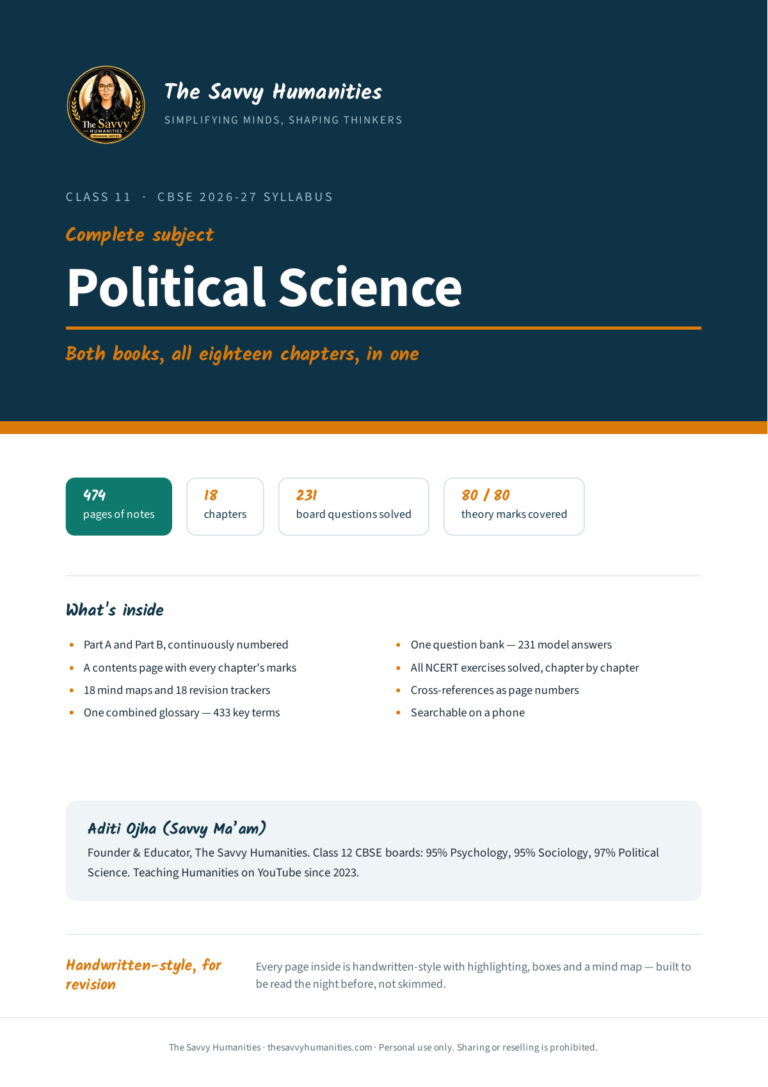
Exam-oriented handwritten-style notes — every page laid out like class notes, with highlighting, boxes and a mind map, built to be read the night before rather than skimmed.
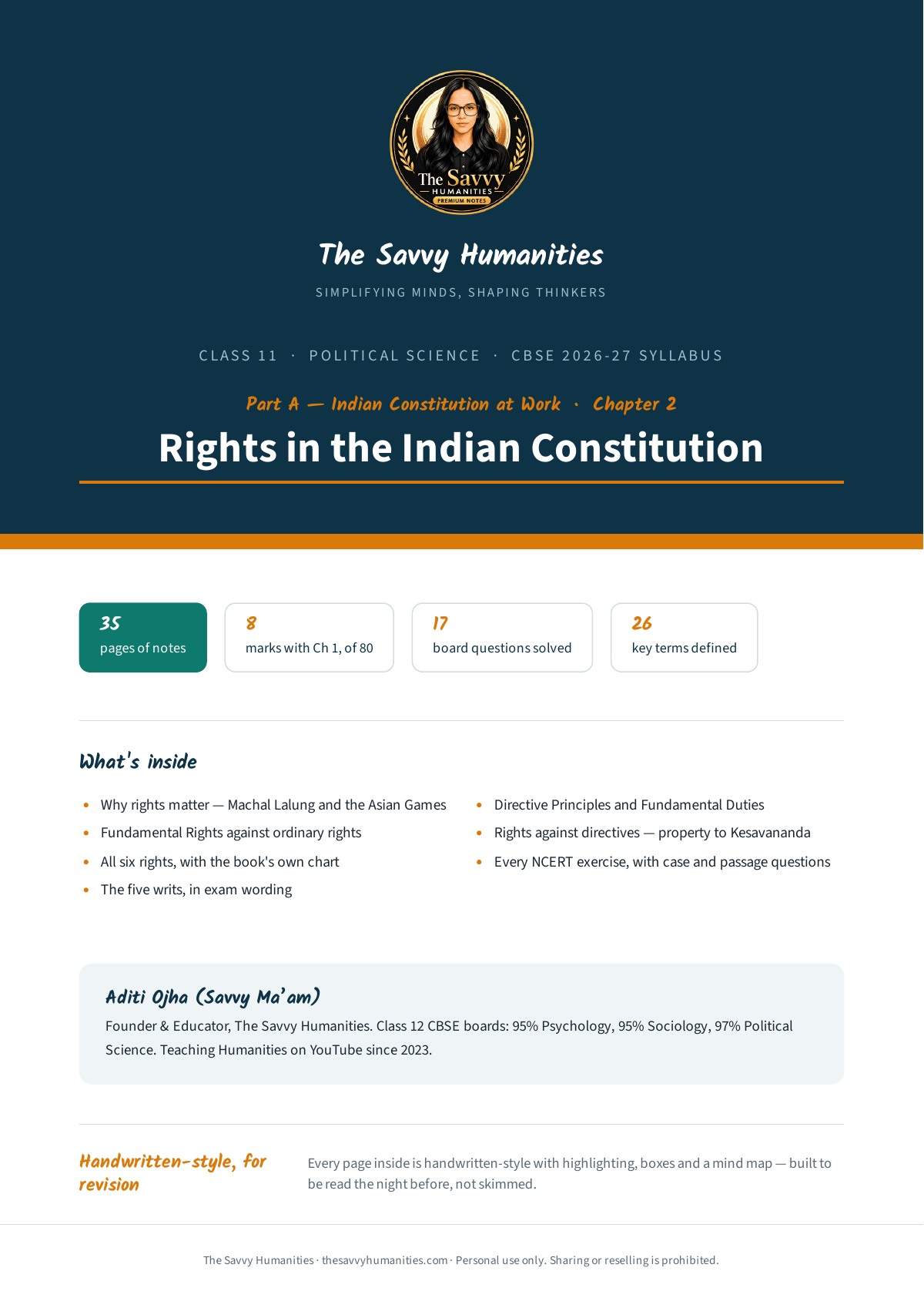
Chapter 2 of Part A, Indian Constitution at Work. CBSE marks Chapters 1 and 2 of Part A together: 8 marks out of 80 for this chapter and Constitution: Why and How? combined. Checked against CBSE’s own 2026-27 curriculum document.
Why do we need rights in a constitution?
The chapter answers with real cases — Machal Lalung and the workers of the Asian Games — and the notes use the same examples to separate Fundamental Rights from ordinary rights.
What are the six Fundamental Rights?
All six, set out with the book’s own chart, followed by the five writs — habeas corpus, mandamus, prohibition, quo warranto and certiorari — in exam wording.
How are Directive Principles different from Fundamental Rights?
Rights are enforceable in court; Directive Principles guide the state but are not. Fundamental Duties are covered alongside.
What happened when rights and directives clashed?
From the right to property to the Kesavananda Bharati judgment — the conflict traced step by step.
What else is in the file
- Chapter at a glance — a one-page mind map of the whole chapter
- A 26-term glossary of every definition the paper can ask for
- 17 questions solved with full model answers — board-pattern questions and NCERT exercises, 1, 2, 4 and 6 markers
- A revision tracker to tick off each topic as read, practised and revised
The file
- Format: PDF, A4 — works on a phone and prints cleanly
- Length: 35 pages plus cover
- Delivery: instant download link after payment, plus a copy by email
- Free updates: if CBSE changes the syllabus or a correction goes in, the updated file is sent to you at no cost. You never pay twice for the same chapter.
By Aditi Ojha (Savvy Ma’am) — Founder and educator, The Savvy Humanities. Teaching Humanities on YouTube since 2023. These notes pair with the free chapter videos; QR codes inside the file link to them.