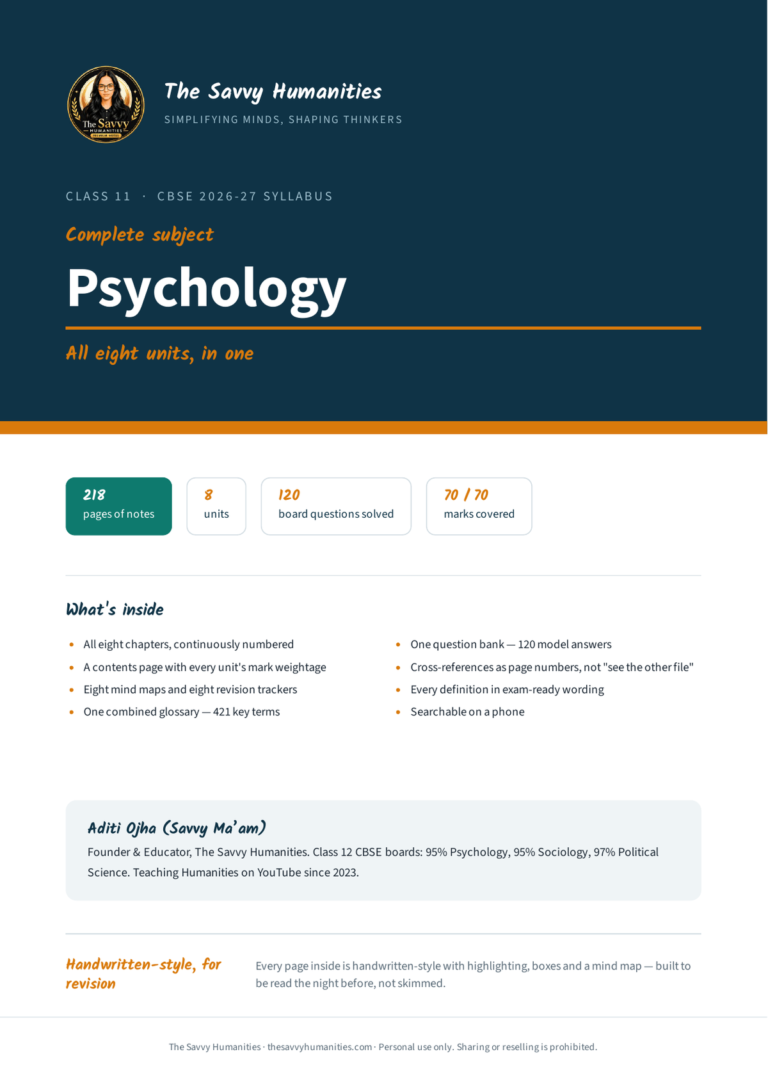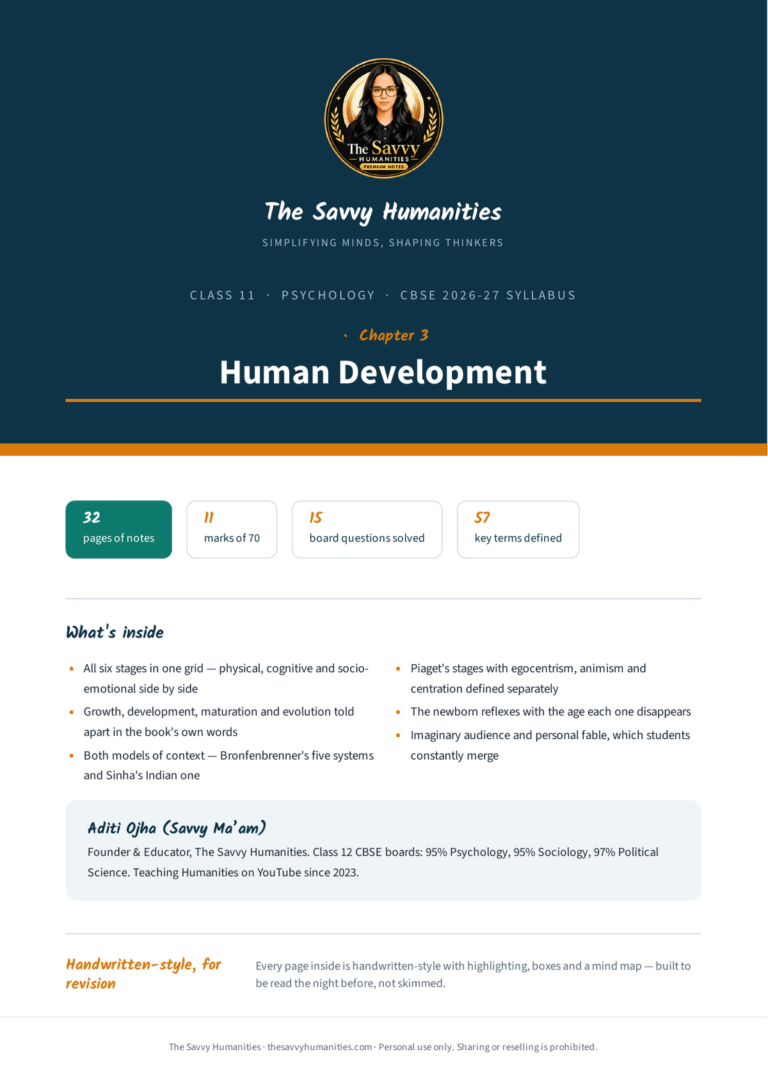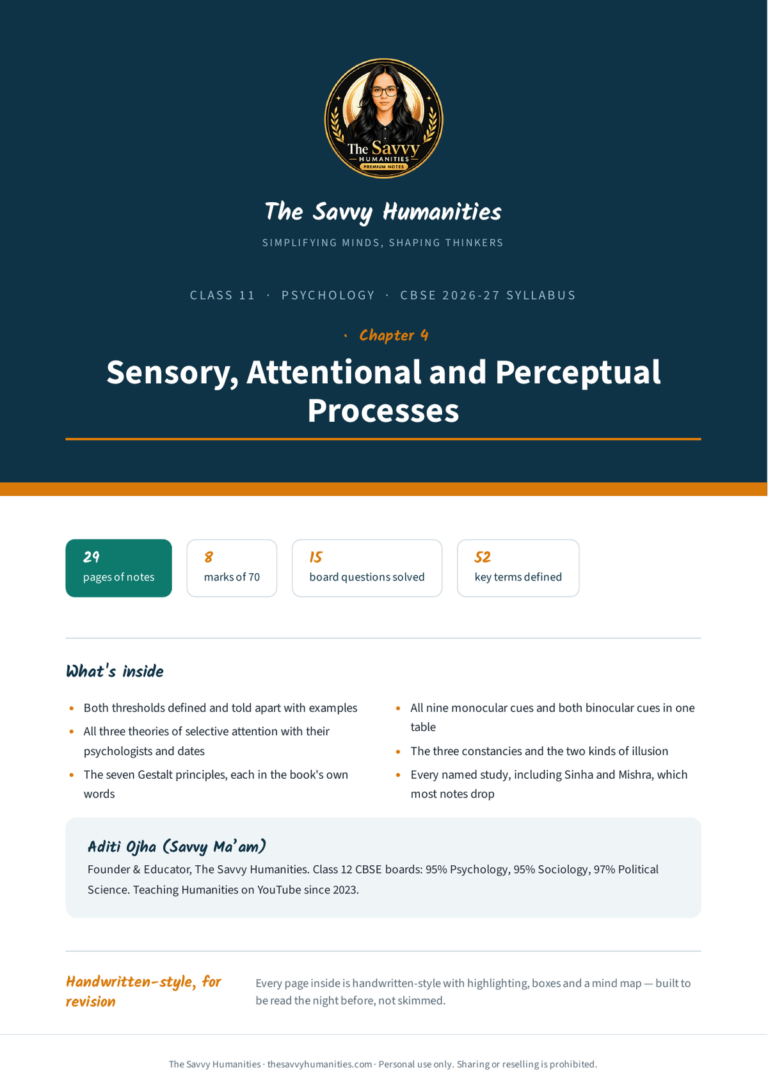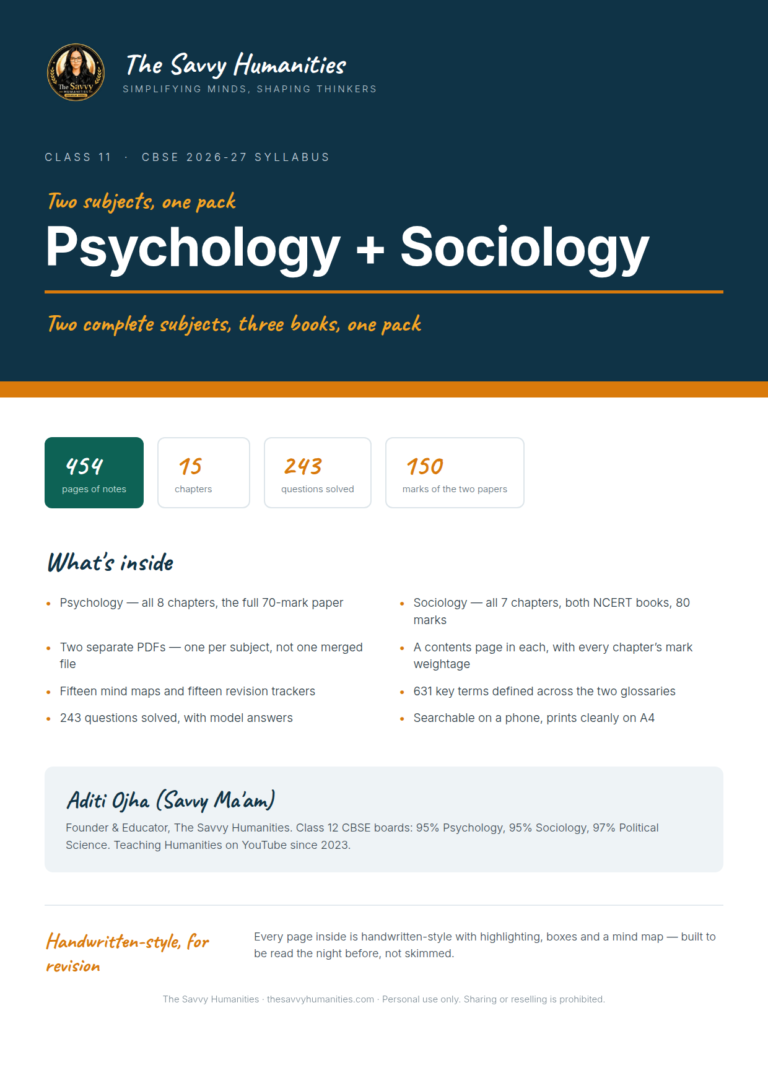
Exam-oriented handwritten-style notes — every page laid out like class notes, with highlighting, boxes and a mind map, built to be read the night before rather than skimmed.
Unit 2 of the CBSE Class 11 Psychology paper carries 13 marks out of 70. Checked against CBSE’s own 2026-27 curriculum document.
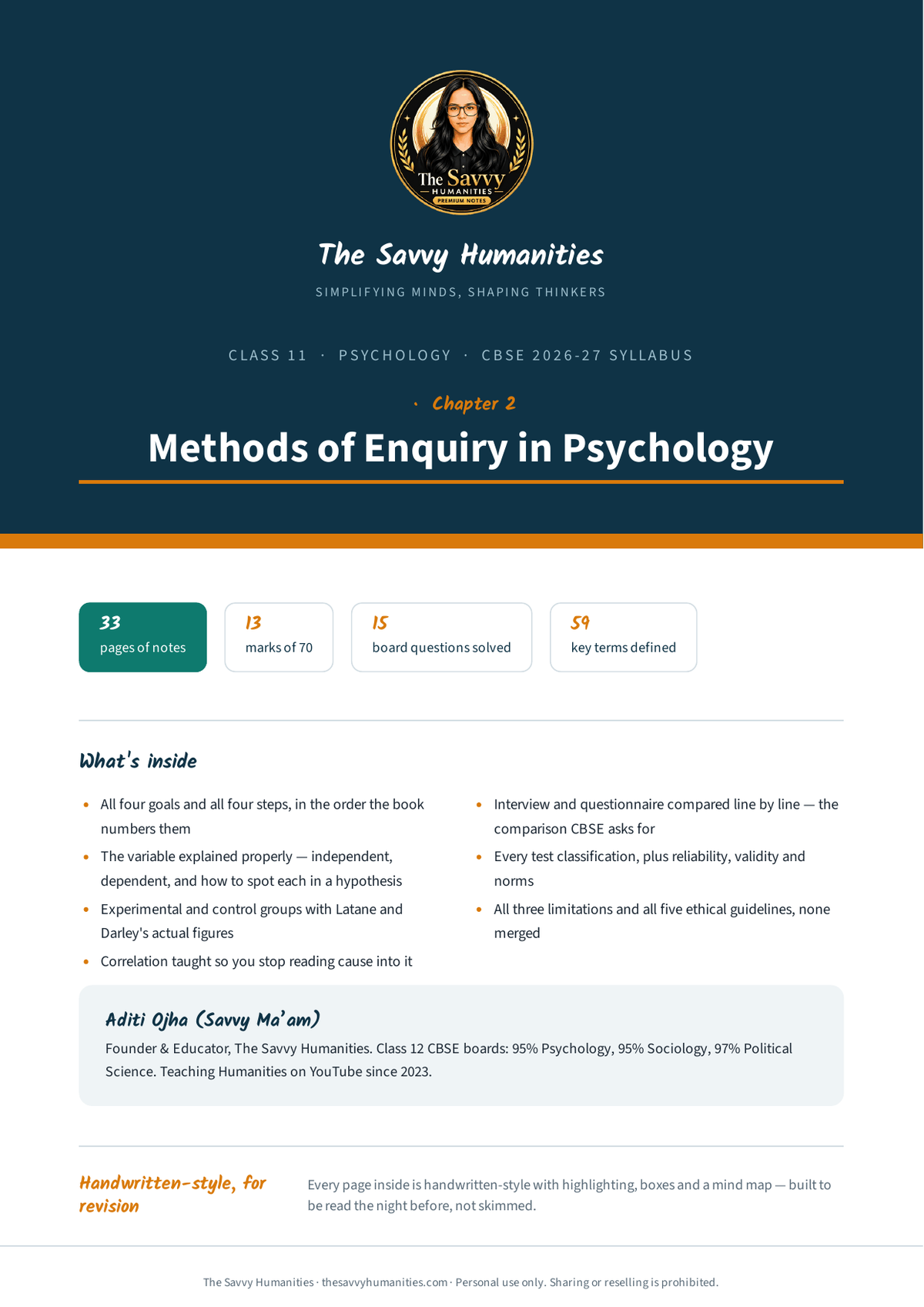
What are the four goals and the four steps, in the order the book numbers them?
Both lists are given in the chapter’s own numbering, not rearranged — which matters, because the paper asks for them in order. At 13 marks this is the largest unit in the Class 11 paper.
How do you spot the independent and the dependent variable in a hypothesis?
The variable is explained properly rather than defined once: independent, dependent, and how to identify each inside a stated hypothesis. Experimental and control groups are set out with Latane and Darley’s actual figures, and correlation is taught so that cause is not read into it.
Interview or questionnaire — the comparison CBSE asks for
Compared line by line. Also here: every test classification, plus reliability, validity and norms, and all three limitations with all five ethical guidelines, none of them merged together.
What else is in the file
- Chapter at a glance — a one-page mind map of the whole chapter
- A 59-term glossary of every definition the paper can ask for
- 15 board-pattern questions with full model answers — 1, 2, 4 and 6 markers
- A revision tracker to tick off each topic as read, practised and revised
The file
- Format: PDF, A4 — works on a phone and prints cleanly
- Length: 33 pages plus cover
- Delivery: instant download link after payment, plus a copy by email
- Free updates: if CBSE changes the syllabus or a correction goes in, the updated file is sent to you at no cost. You never pay twice for the same chapter.
By Aditi Ojha (Savvy Ma’am) — Founder and educator, The Savvy Humanities. Teaching Humanities on YouTube since 2023. These notes pair with the free chapter videos; QR codes inside the file link to them.