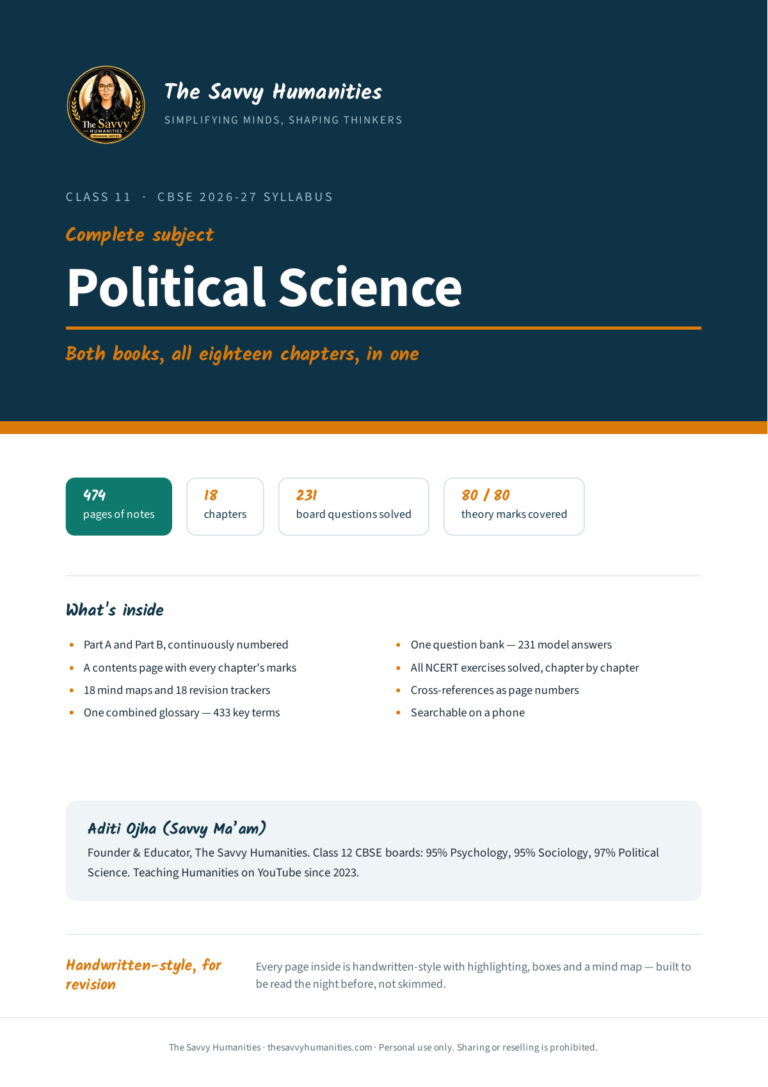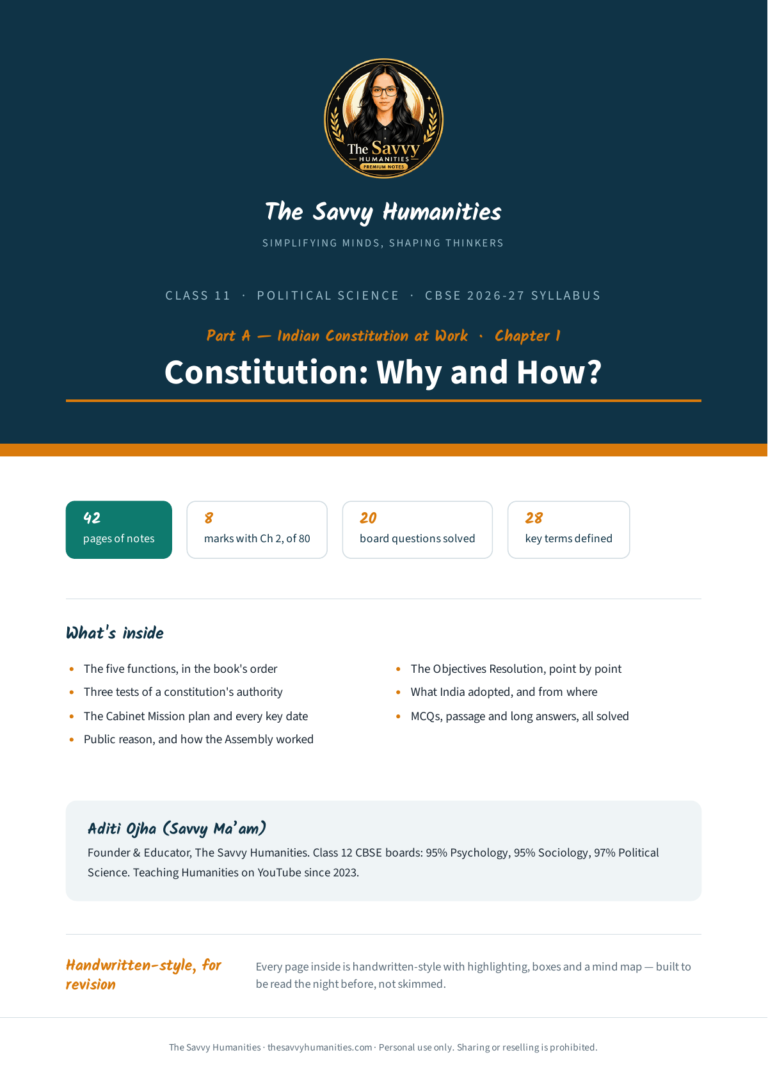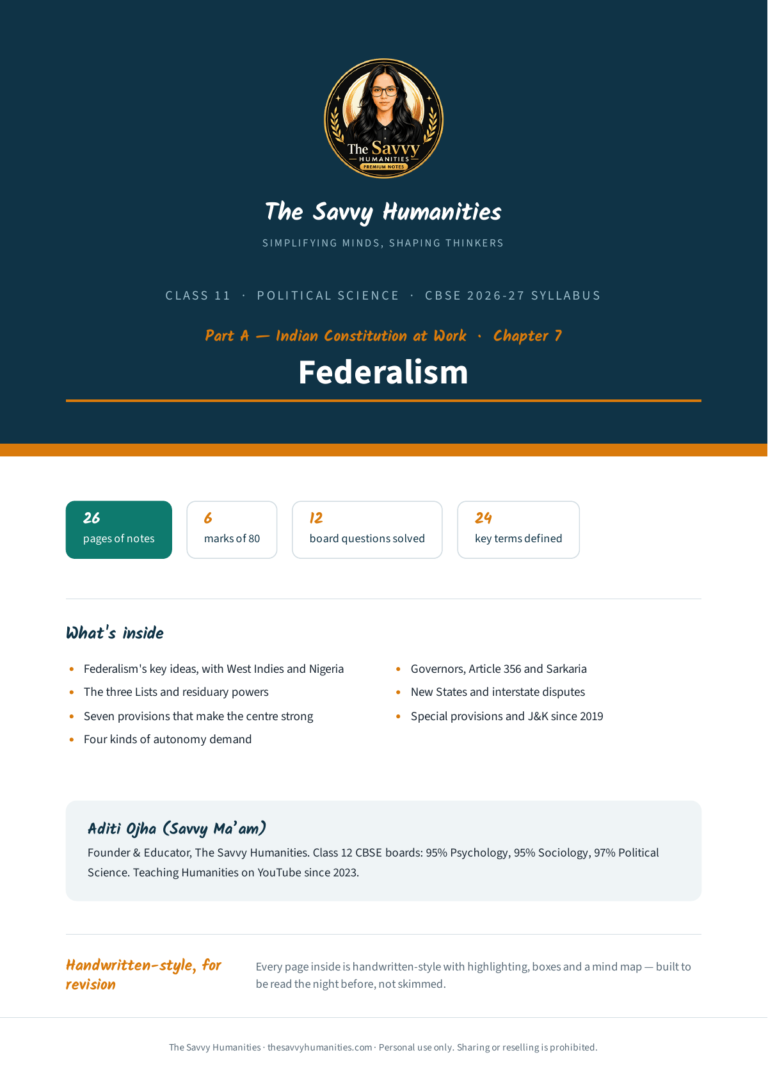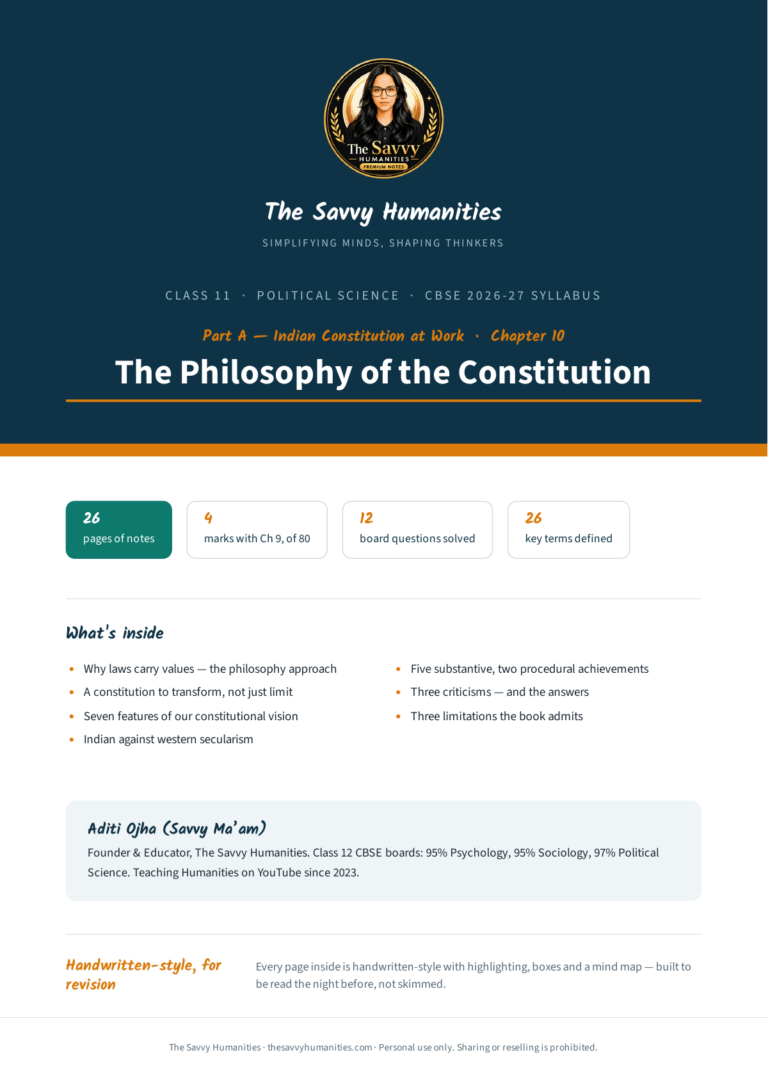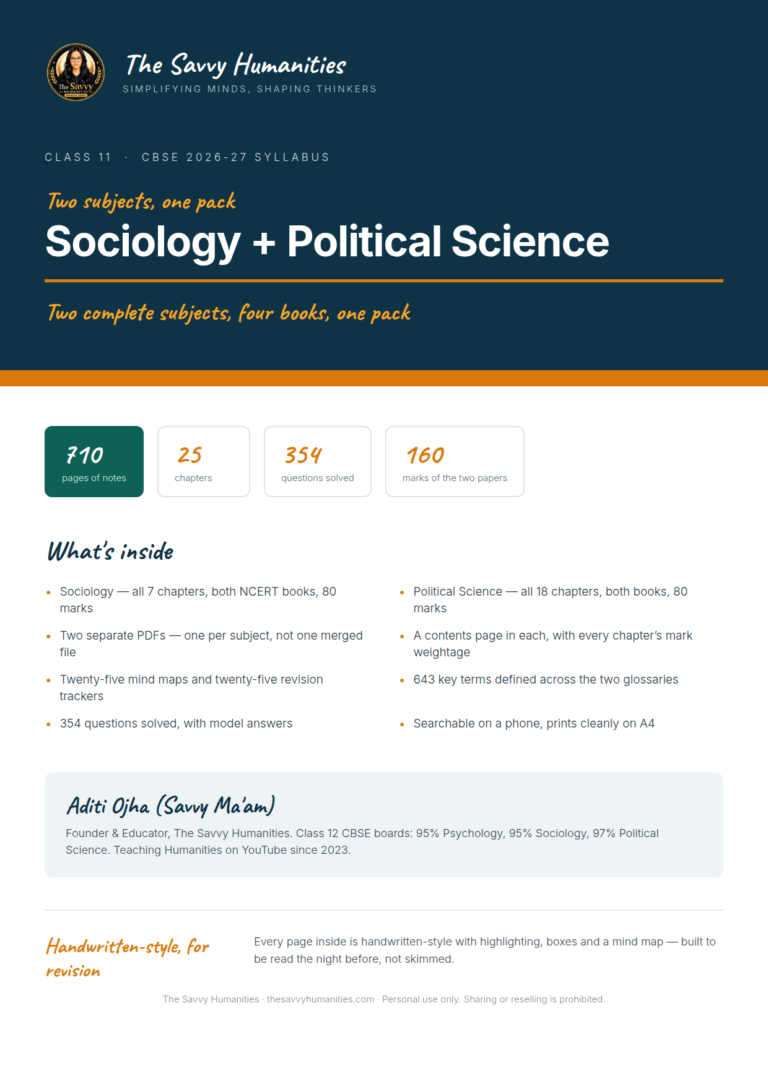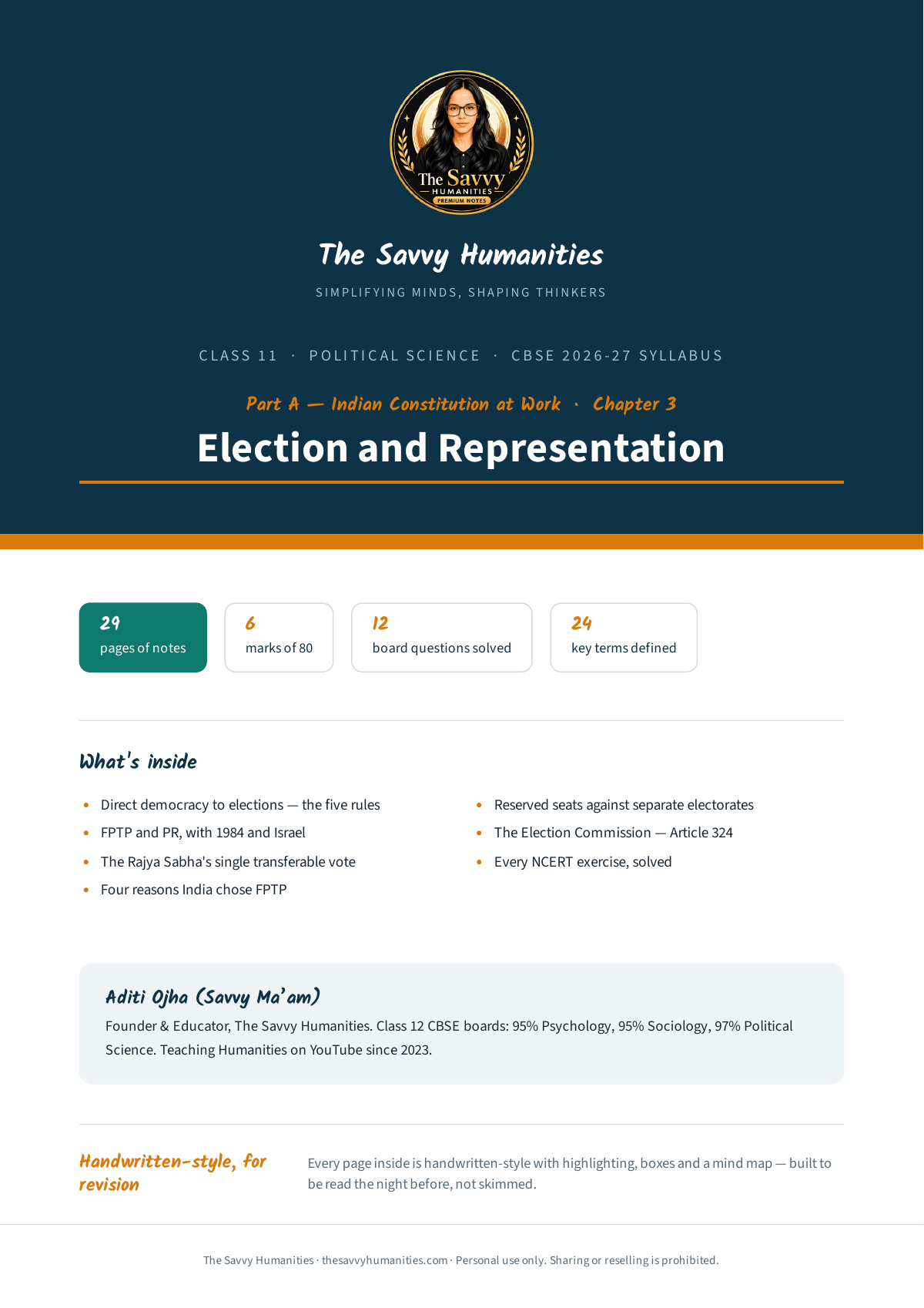
Exam-oriented handwritten-style notes — every page laid out like class notes, with highlighting, boxes and a mind map, built to be read the night before rather than skimmed.
Chapter 3 of Part A, Indian Constitution at Work. CBSE gives Election and Representation 6 marks out of 80 on its own. Checked against CBSE’s own 2026-27 curriculum document.
What is the difference between FPTP and proportional representation?
FPTP gives the seat to whoever gets the most votes; PR gives parties seats in proportion to their vote share. The notes compare them side by side with the book’s examples — 1984 in India and Israel — plus the single transferable vote used for the Rajya Sabha.
Why did India choose the FPTP system?
The book gives four reasons, and the notes keep all four separate.
What is the difference between reserved seats and separate electorates?
Separate electorates let only one community vote for its candidate; reserved constituencies let everyone vote but only a reserved-category candidate can stand. The notes explain why the Constitution chose the second.
What does the Election Commission do?
Its powers under Article 324, its composition and its independence.
What else is in the file
- Chapter at a glance — a one-page mind map of the whole chapter
- A 24-term glossary of every definition the paper can ask for
- 12 questions solved with full model answers — board-pattern questions and NCERT exercises, 1, 2, 4 and 6 markers
- A revision tracker to tick off each topic as read, practised and revised
The file
- Format: PDF, A4 — works on a phone and prints cleanly
- Length: 29 pages plus cover
- Delivery: instant download link after payment, plus a copy by email
- Free updates: if CBSE changes the syllabus or a correction goes in, the updated file is sent to you at no cost. You never pay twice for the same chapter.
By Aditi Ojha (Savvy Ma’am) — Founder and educator, The Savvy Humanities. Teaching Humanities on YouTube since 2023. These notes pair with the free chapter videos; QR codes inside the file link to them.