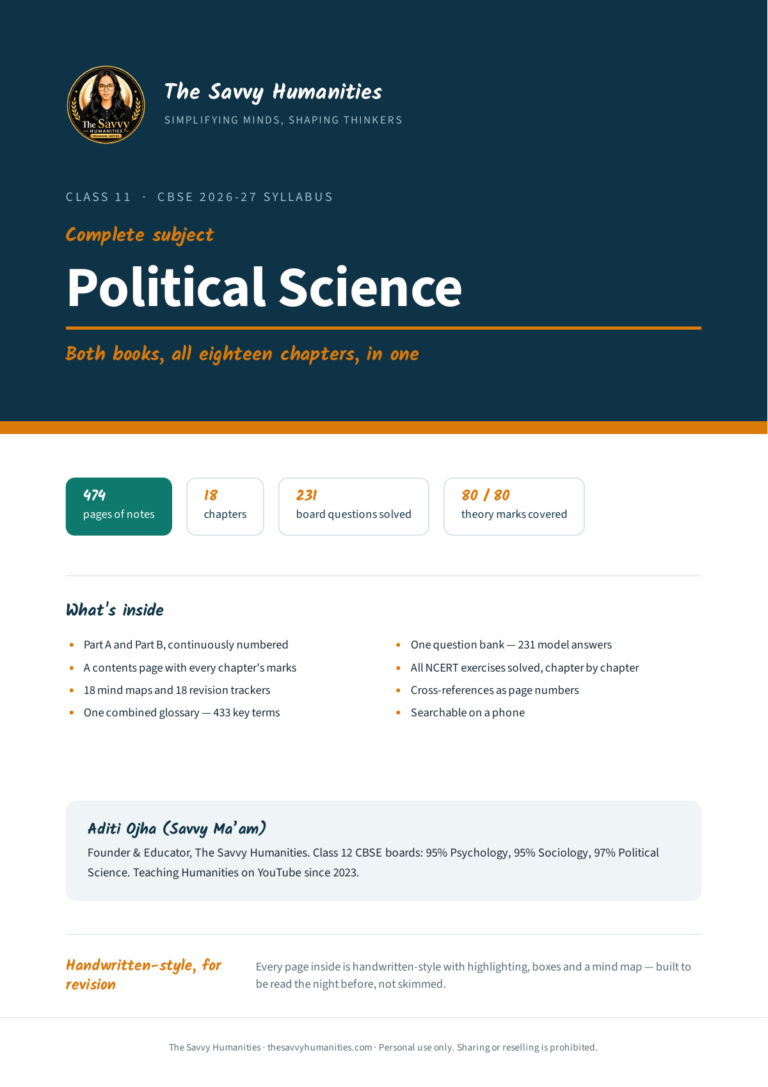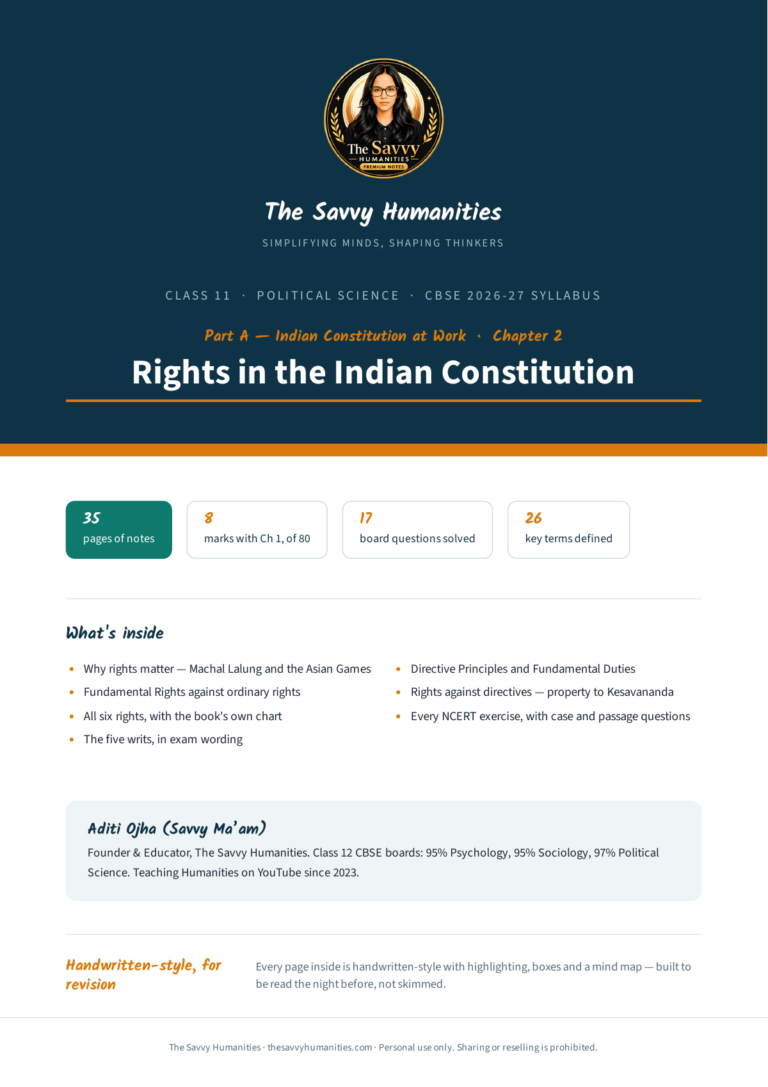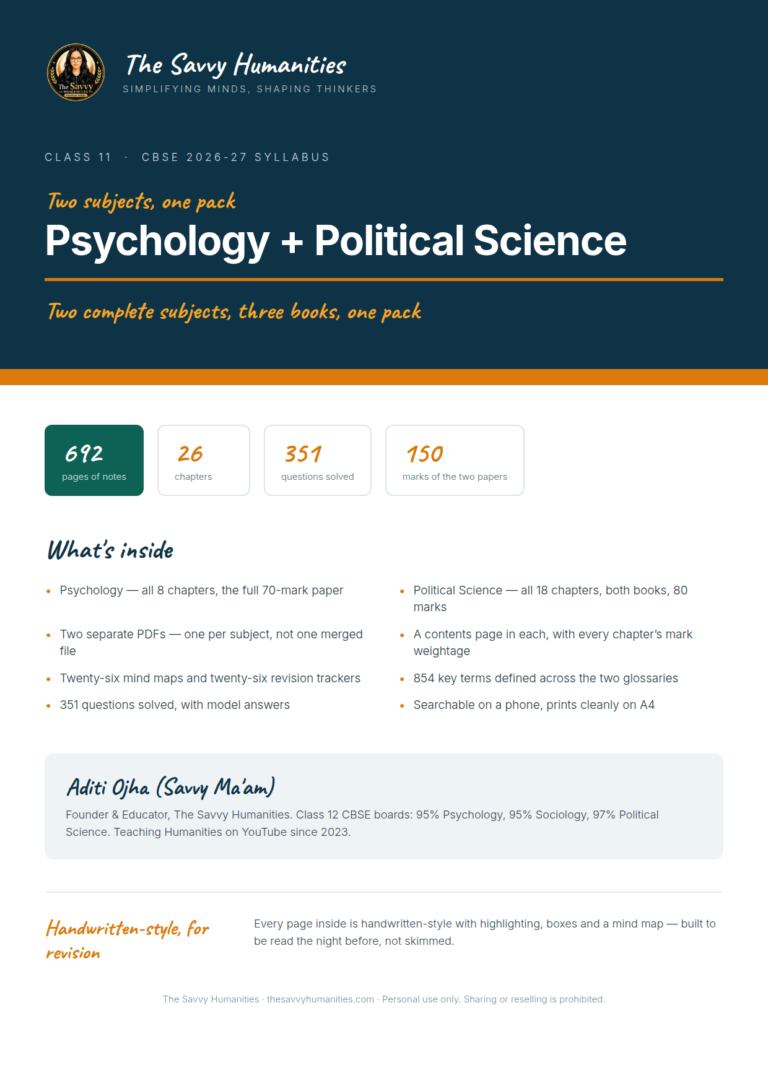
Exam-oriented handwritten-style notes — every page laid out like class notes, with highlighting, boxes and a mind map, built to be read the night before rather than skimmed.
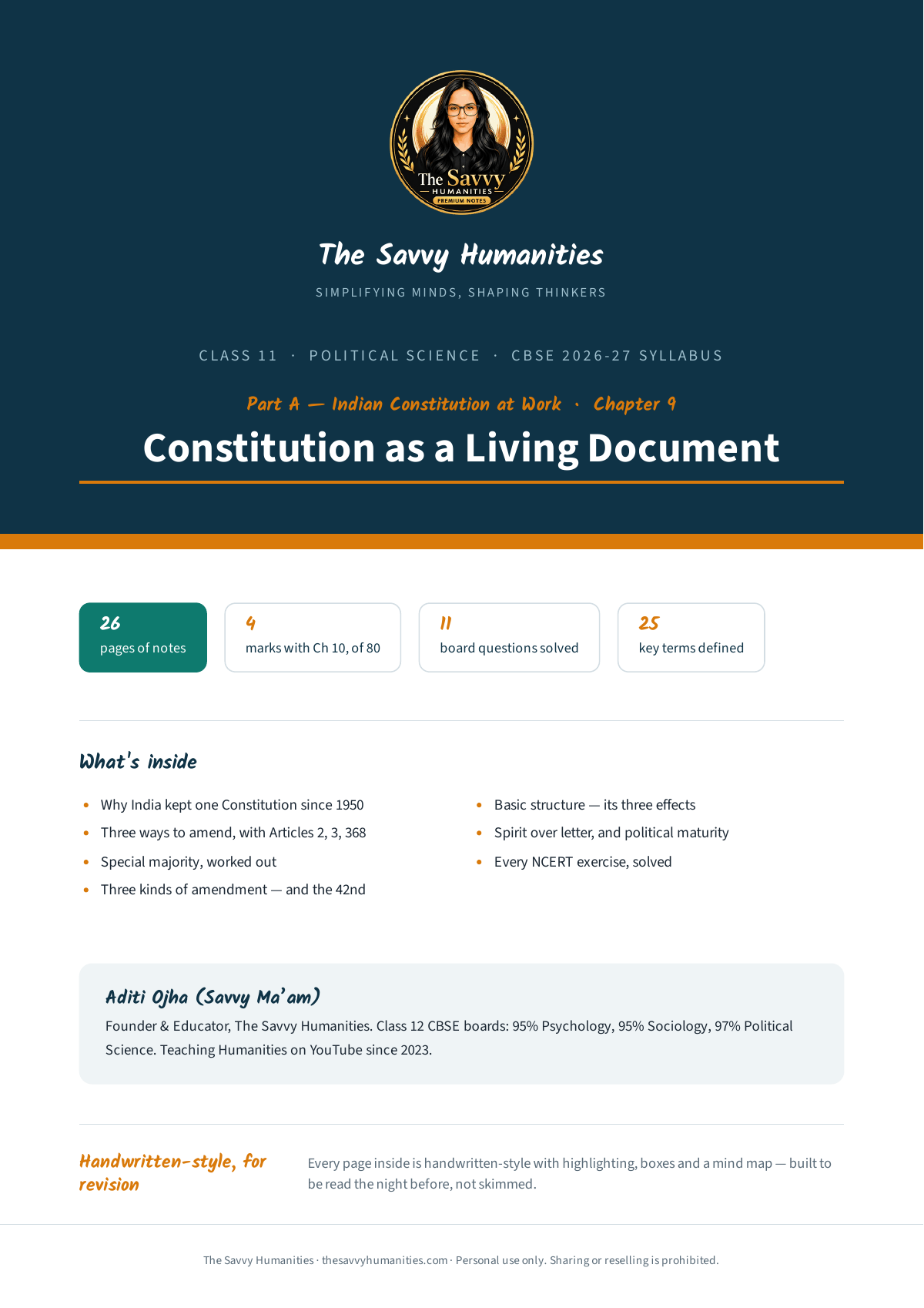
Chapter 9 of Part A, Indian Constitution at Work. CBSE marks Chapters 9 and 10 of Part A together: 4 marks out of 80 for this chapter and The Philosophy of the Constitution combined. Checked against CBSE’s own 2026-27 curriculum document.
Why has India kept the same Constitution since 1950?
Because it can change without being replaced — the chapter’s answer, and the frame for everything that follows.
How is the Indian Constitution amended?
Three ways — with Articles 2, 3 and 368 — and special majority worked out with numbers.
What kinds of amendments have been made?
Three kinds, and the 42nd Amendment as the book’s case.
What is the basic structure doctrine?
The limit the Supreme Court placed on the amending power in Kesavananda Bharati, and its three effects — then spirit over letter, and political maturity.
What else is in the file
- Chapter at a glance — a one-page mind map of the whole chapter
- A 25-term glossary of every definition the paper can ask for
- 11 questions solved with full model answers — board-pattern questions and NCERT exercises, 1, 2, 4 and 6 markers
- A revision tracker to tick off each topic as read, practised and revised
The file
- Format: PDF, A4 — works on a phone and prints cleanly
- Length: 26 pages plus cover
- Delivery: instant download link after payment, plus a copy by email
- Free updates: if CBSE changes the syllabus or a correction goes in, the updated file is sent to you at no cost. You never pay twice for the same chapter.
By Aditi Ojha (Savvy Ma’am) — Founder and educator, The Savvy Humanities. Teaching Humanities on YouTube since 2023. These notes pair with the free chapter videos; QR codes inside the file link to them.