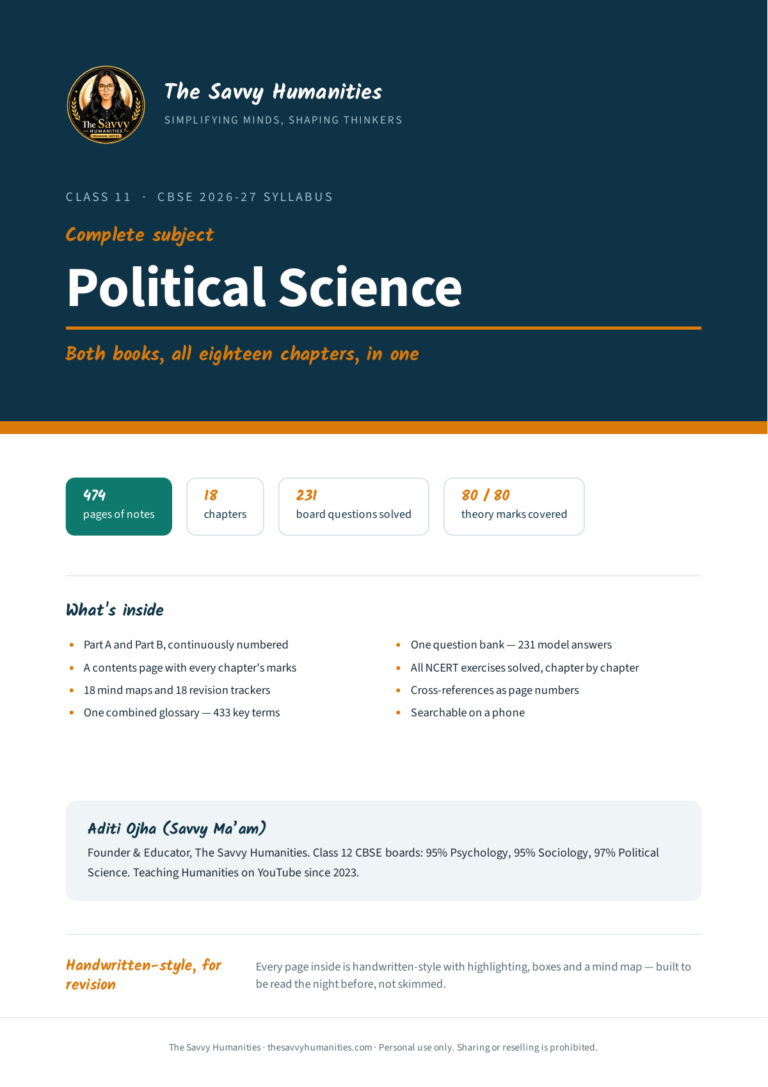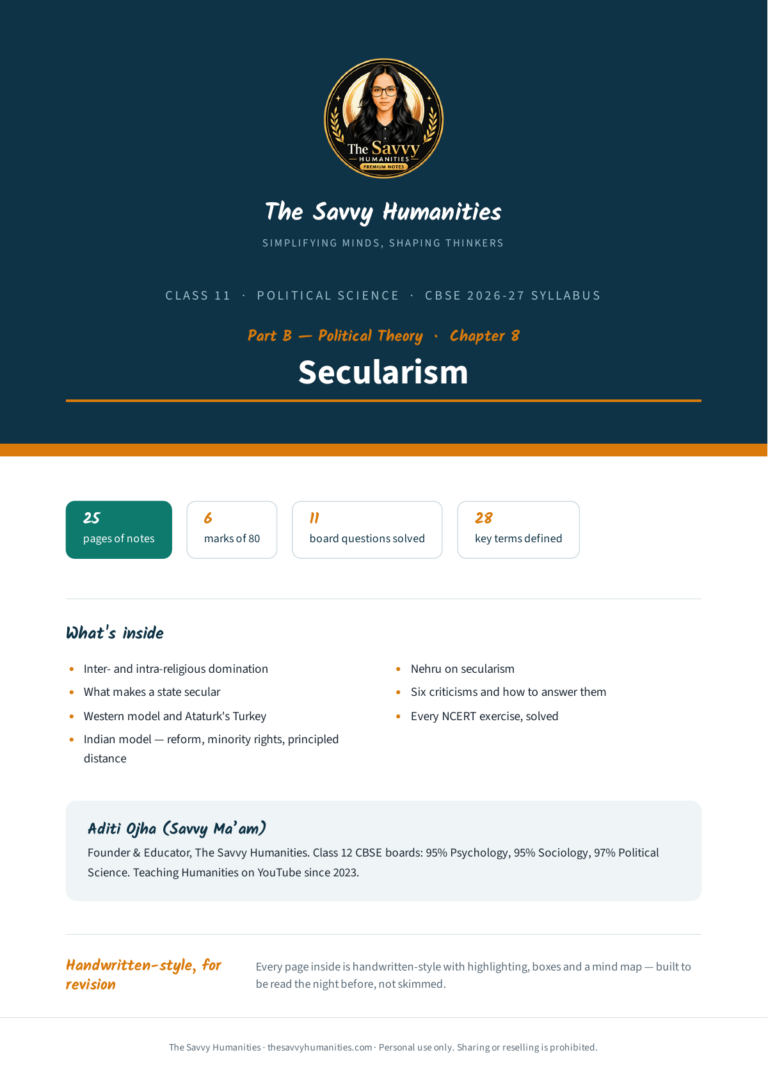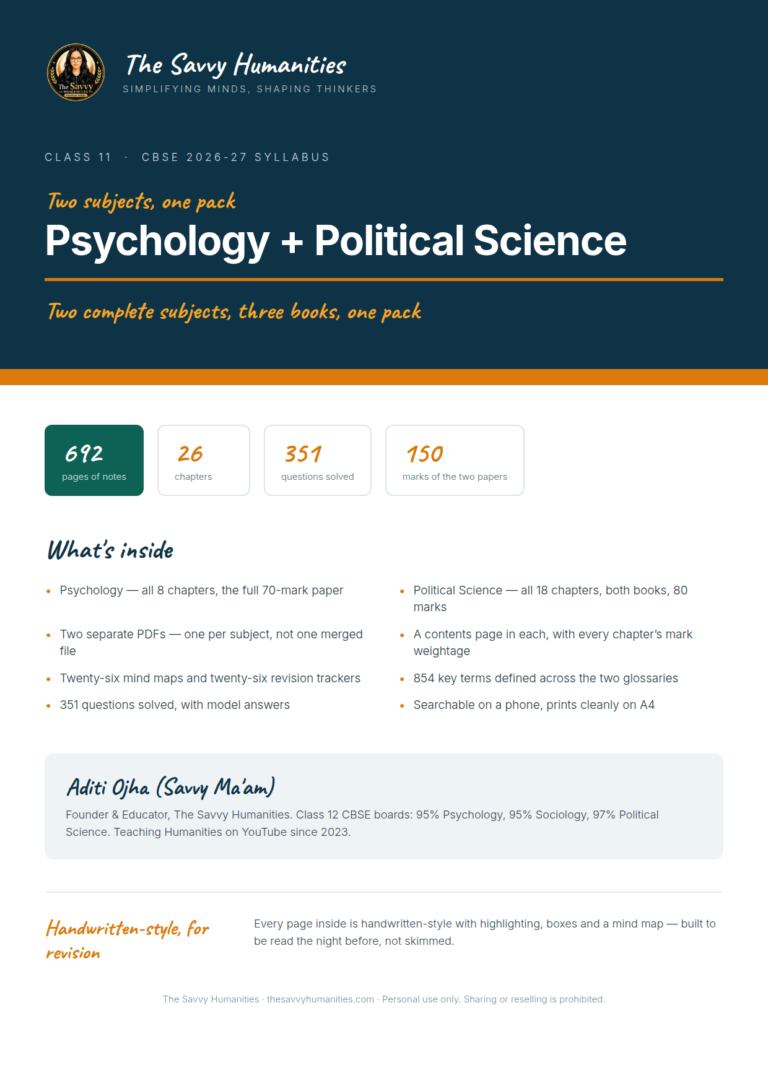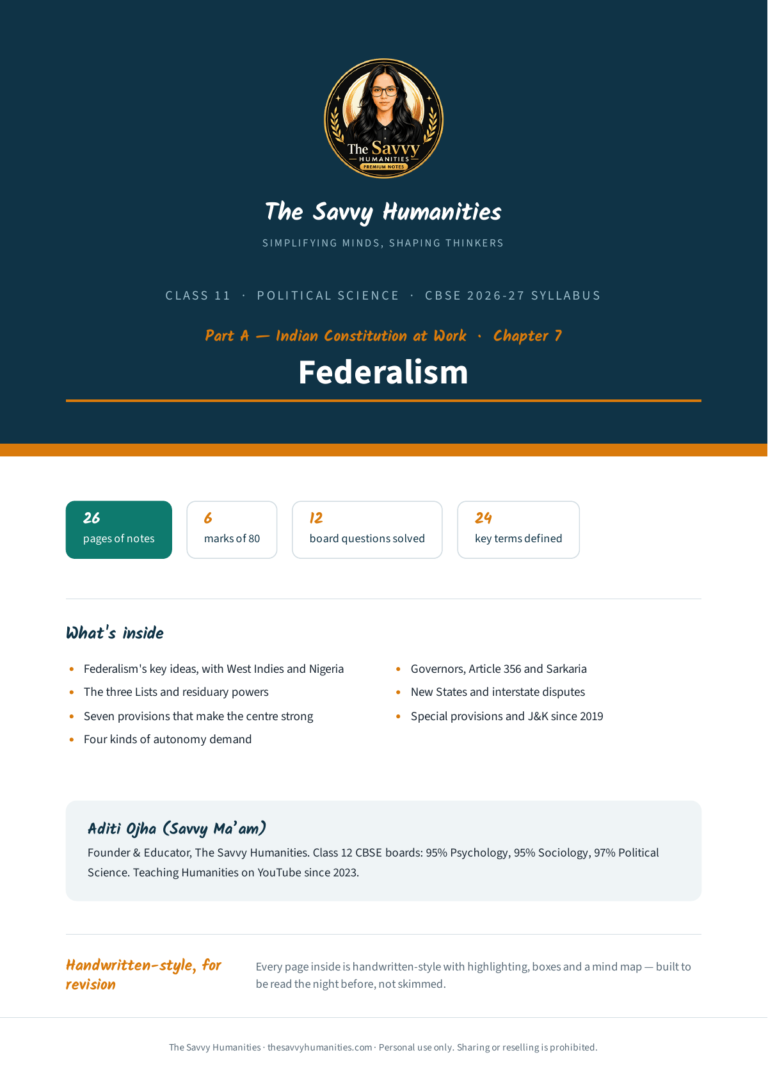
Exam-oriented handwritten-style notes — every page laid out like class notes, with highlighting, boxes and a mind map, built to be read the night before rather than skimmed.
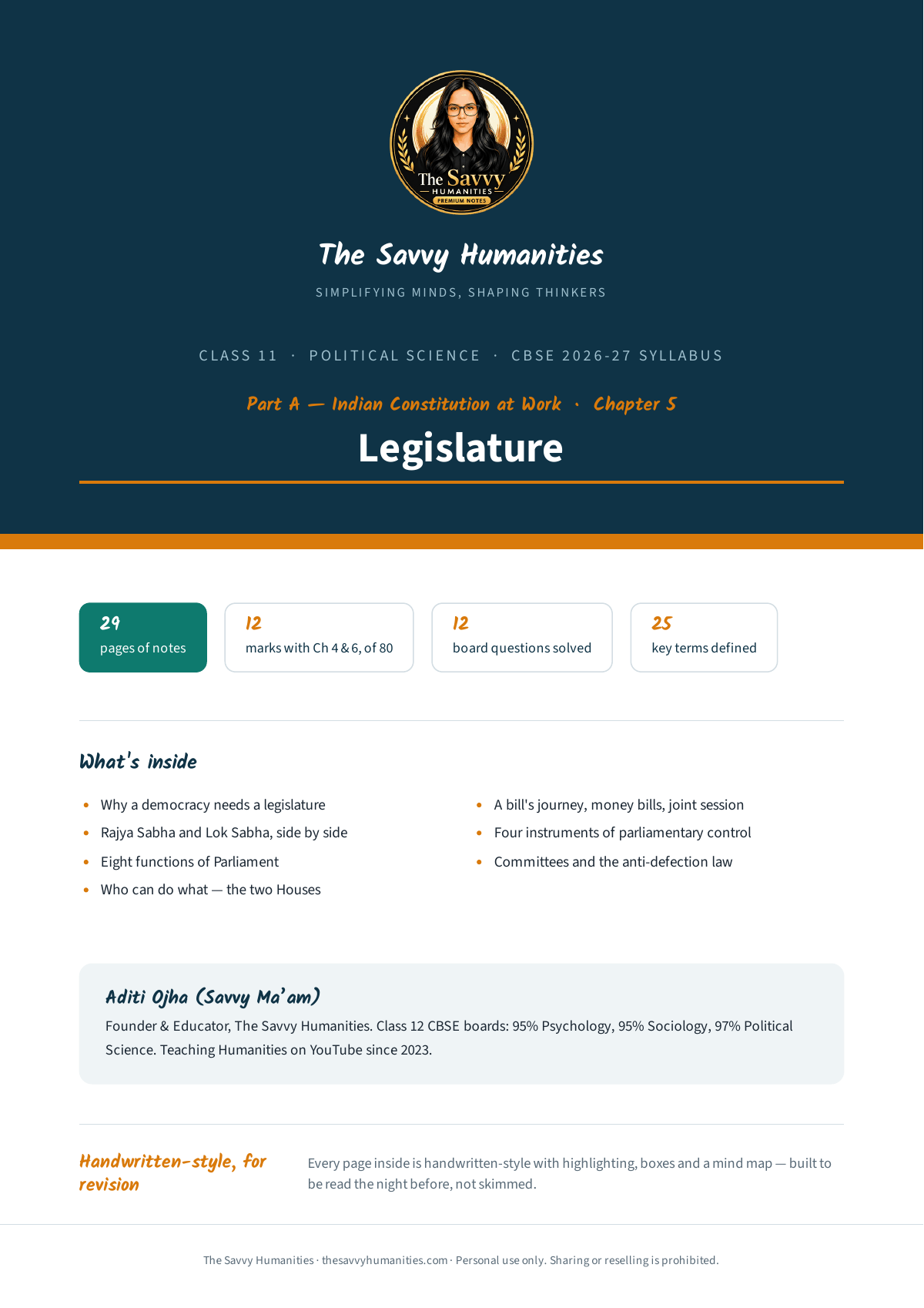
Chapter 5 of Part A, Indian Constitution at Work. CBSE marks Executive, Legislature and Judiciary together: 12 marks out of 80 for the three chapters combined. Checked against CBSE’s own 2026-27 curriculum document.
Why does a democracy need a legislature, and why two Houses?
The legislature is where the people’s representatives debate and make law. The notes compare the Rajya Sabha and Lok Sabha side by side — composition, term and who can do what.
What are the functions of Parliament?
Eight functions, as the book lists them.
How does a bill become a law?
A bill’s journey through both Houses, the special route for money bills, and the joint session when the Houses disagree.
How does Parliament control the executive?
Four instruments of parliamentary control — from question hour to the no-confidence motion — then committees and the anti-defection law.
What else is in the file
- Chapter at a glance — a one-page mind map of the whole chapter
- A 25-term glossary of every definition the paper can ask for
- 12 questions solved with full model answers — board-pattern questions and NCERT exercises, 1, 2, 4 and 6 markers
- A revision tracker to tick off each topic as read, practised and revised
The file
- Format: PDF, A4 — works on a phone and prints cleanly
- Length: 29 pages plus cover
- Delivery: instant download link after payment, plus a copy by email
- Free updates: if CBSE changes the syllabus or a correction goes in, the updated file is sent to you at no cost. You never pay twice for the same chapter.
By Aditi Ojha (Savvy Ma’am) — Founder and educator, The Savvy Humanities. Teaching Humanities on YouTube since 2023. These notes pair with the free chapter videos; QR codes inside the file link to them.