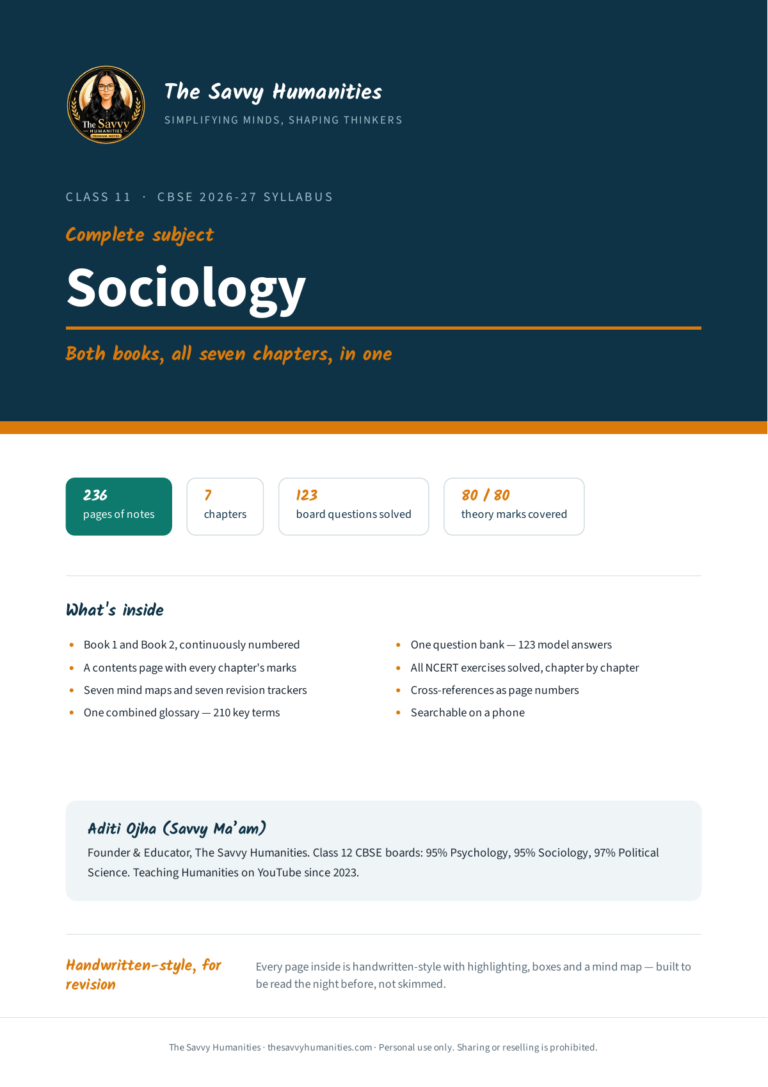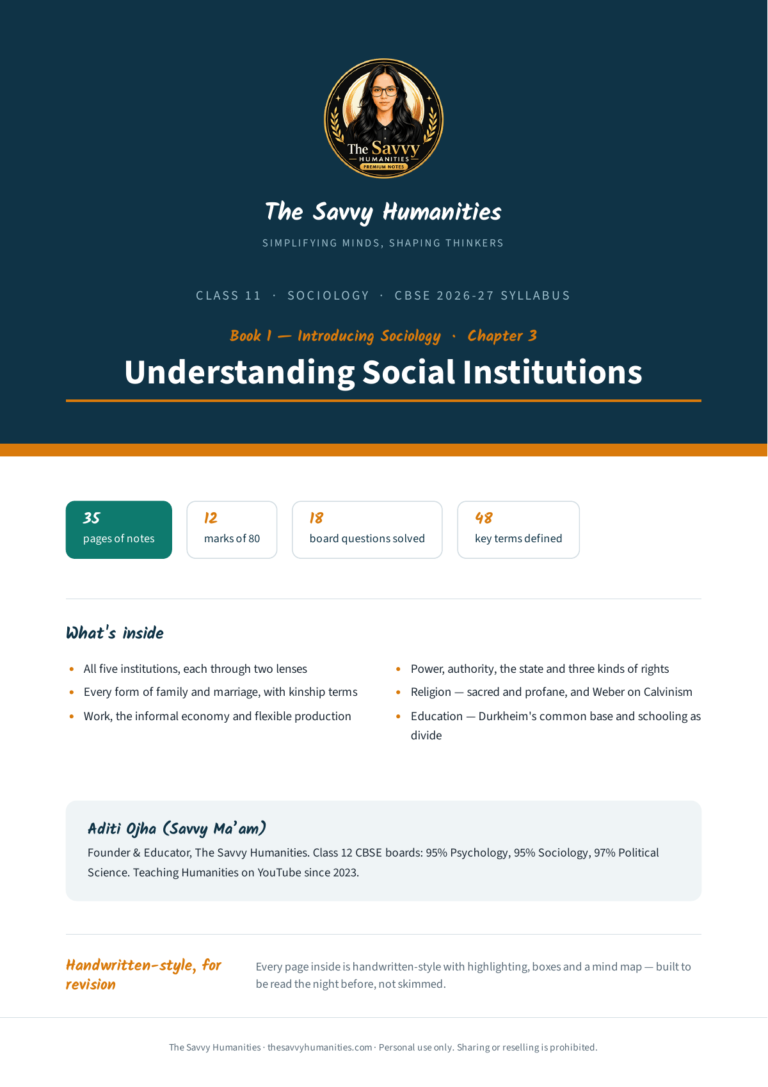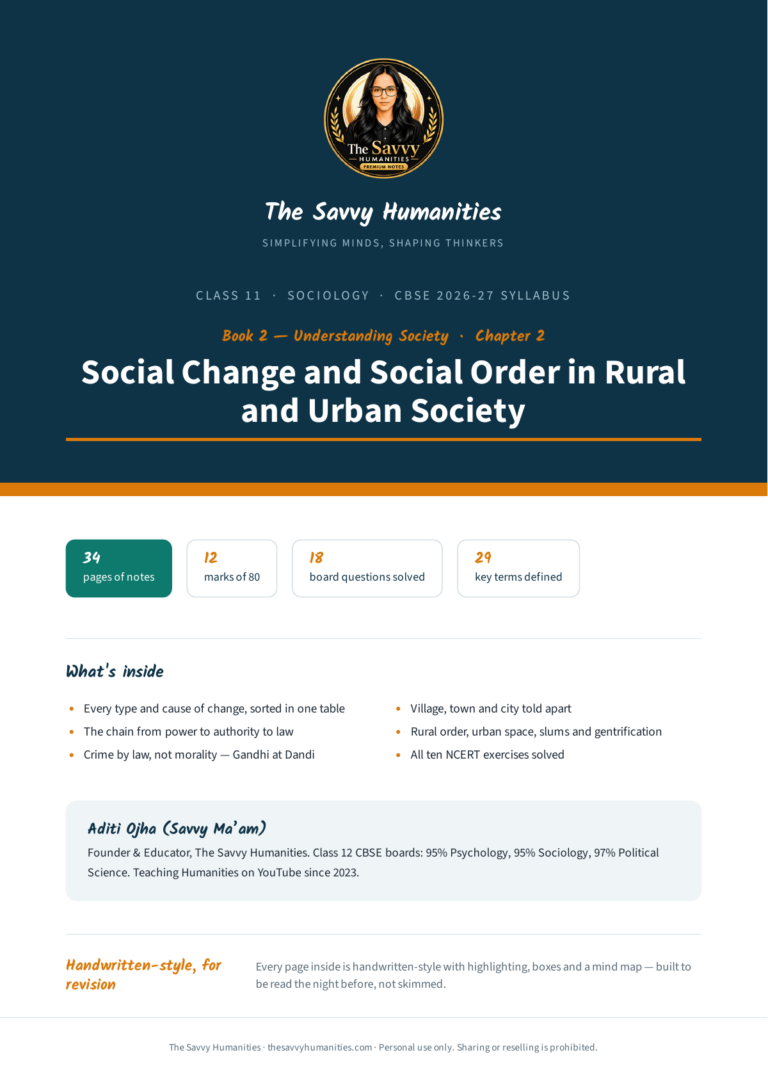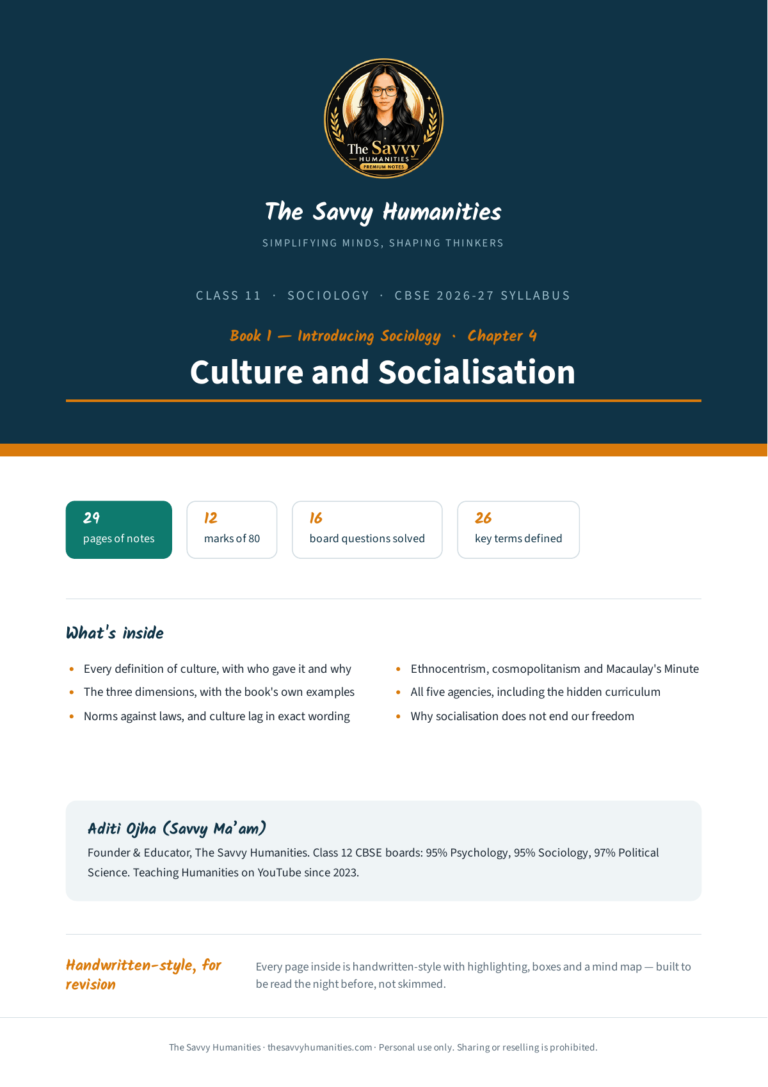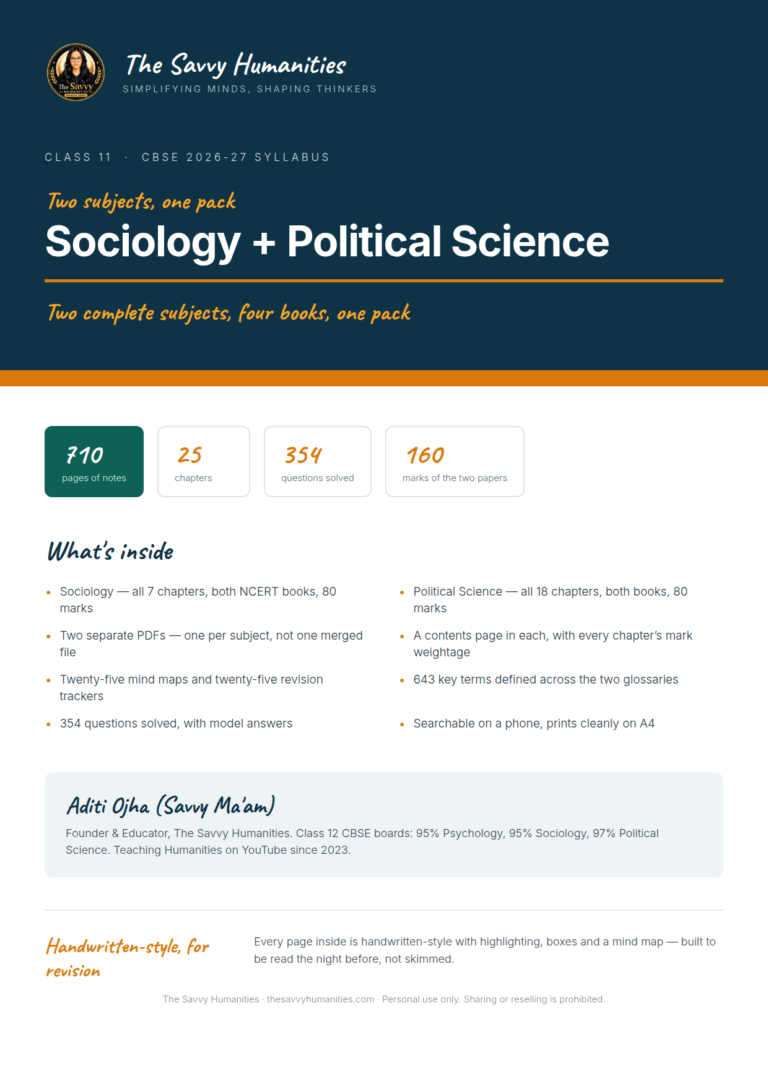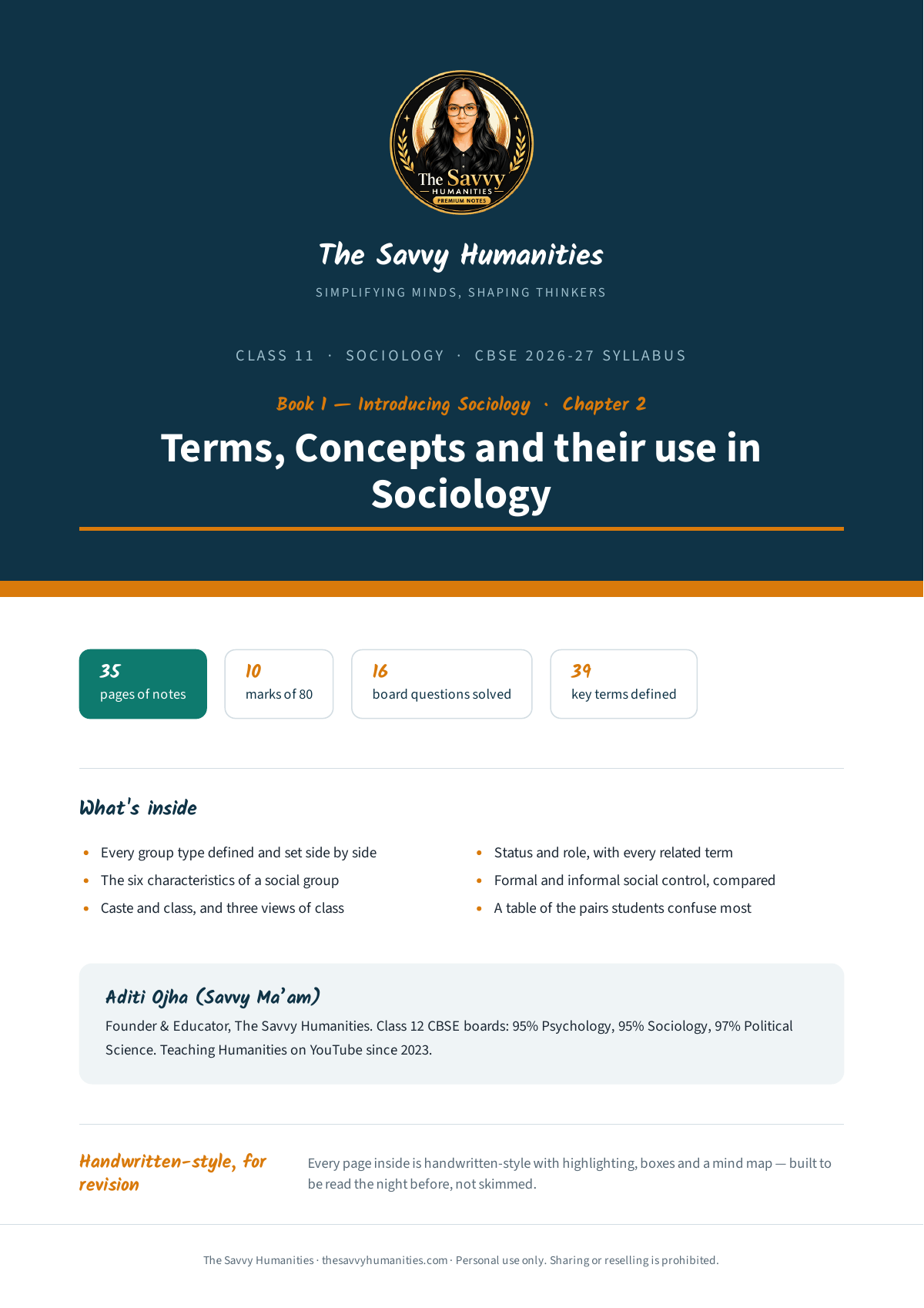
Exam-oriented handwritten-style notes — every page laid out like class notes, with highlighting, boxes and a mind map, built to be read the night before rather than skimmed.
Unit 2 of the CBSE Class 11 Sociology paper carries 10 marks out of 80. This is the vocabulary chapter — the terms here come back in almost every later unit.
What are the different types of social groups?
Every group type the chapter defines is set side by side — primary and secondary, in-group and out-group, community and society, reference group and peer group — along with the six characteristics of a social group.
What is the difference between status and role?
Status is the position; role is the behaviour expected of it. The notes cover ascribed and achieved status, prestige, and every related term the chapter uses.
How are caste and class different?
Caste is fixed by birth; class is, in principle, open. The notes then give the three views of class — Marxist, Weberian and functionalist — kept separate, as the paper asks for them.
What is the difference between formal and informal social control?
Formal control works through law and the state; informal control through custom, praise and ridicule. Both are compared in a table, and a second table lists the pairs of terms students confuse most.
What else is in the file
- Chapter at a glance — a one-page mind map of the whole chapter
- A 39-term glossary of every definition the paper can ask for
- 16 questions solved with full model answers — board-pattern MCQs, passage-based and long answers (including 5 NCERT exercise questions), 1, 2, 4 and 6 markers
- A revision tracker to tick off each topic as read, practised and revised
The file
- Format: PDF, A4 — works on a phone and prints cleanly
- Length: 35 pages plus cover
- Delivery: instant download link after payment, plus a copy by email
- Free updates: if CBSE changes the syllabus or a correction goes in, the updated file is sent to you at no cost. You never pay twice for the same chapter.
By Aditi Ojha (Savvy Ma’am) — Founder and educator, The Savvy Humanities. Teaching Humanities on YouTube since 2023. These notes pair with the free chapter videos; QR codes inside the file link to them.