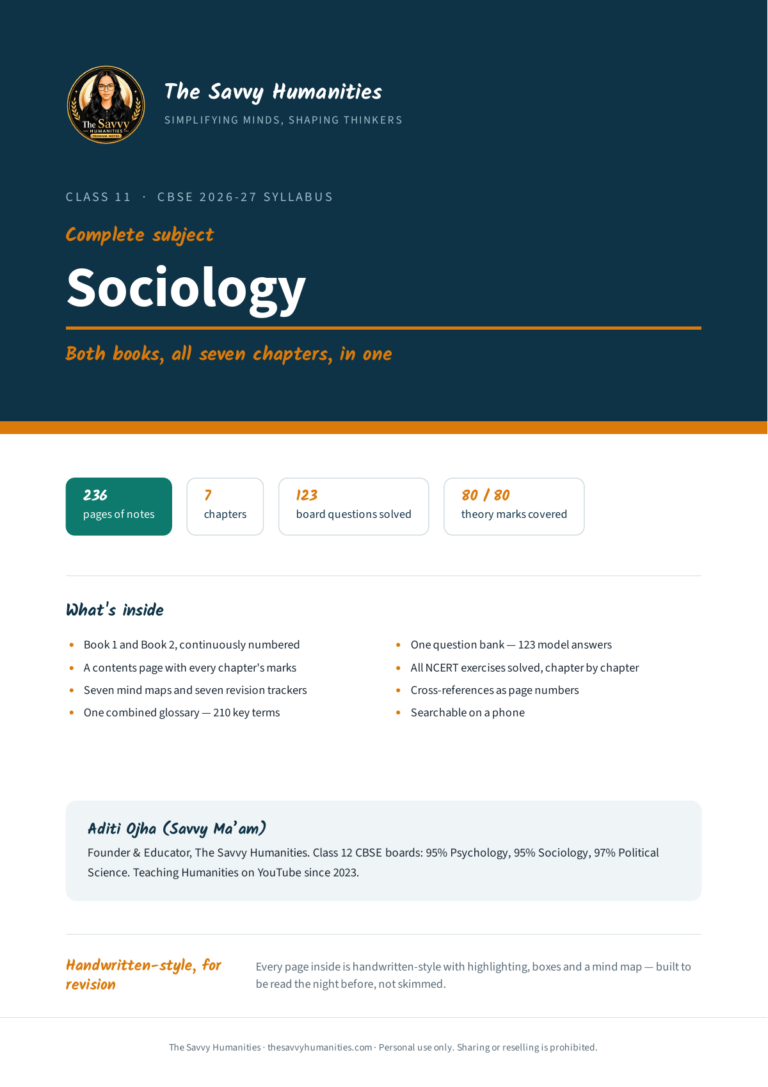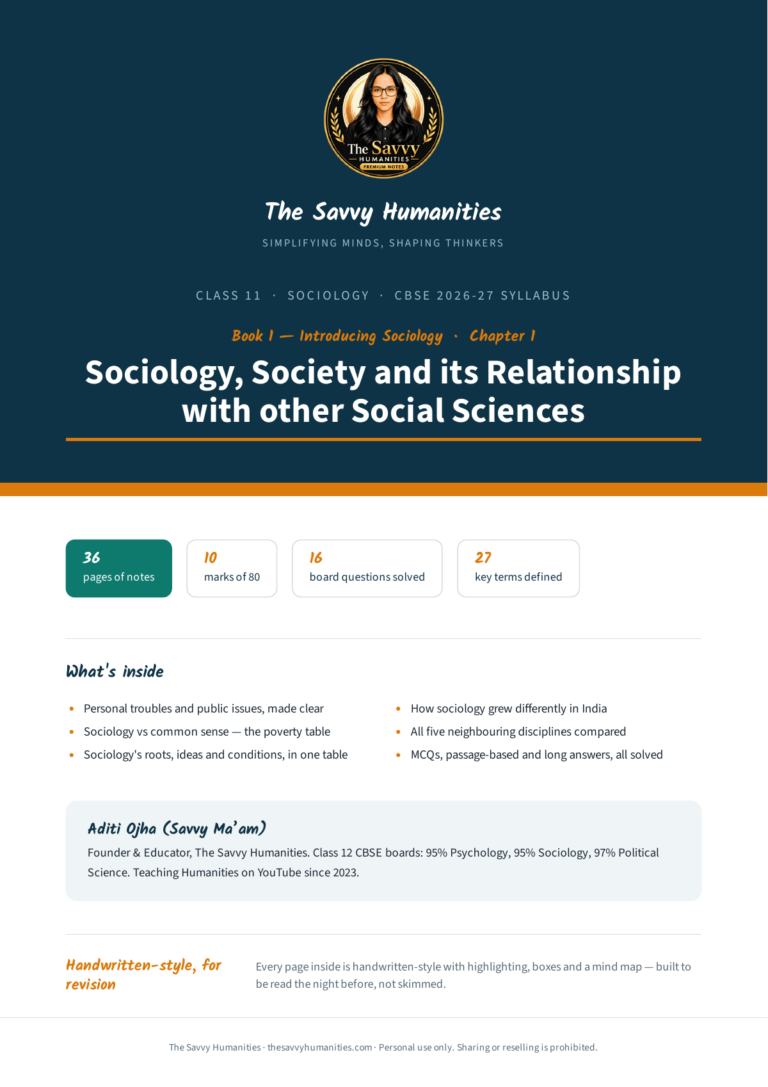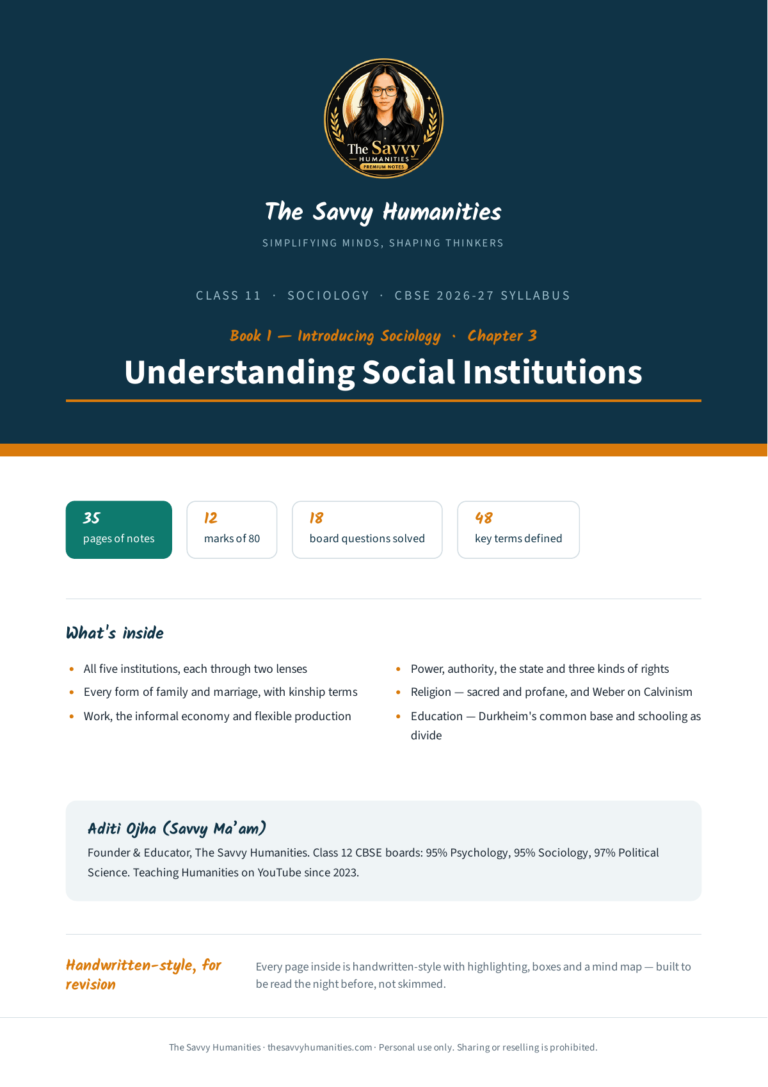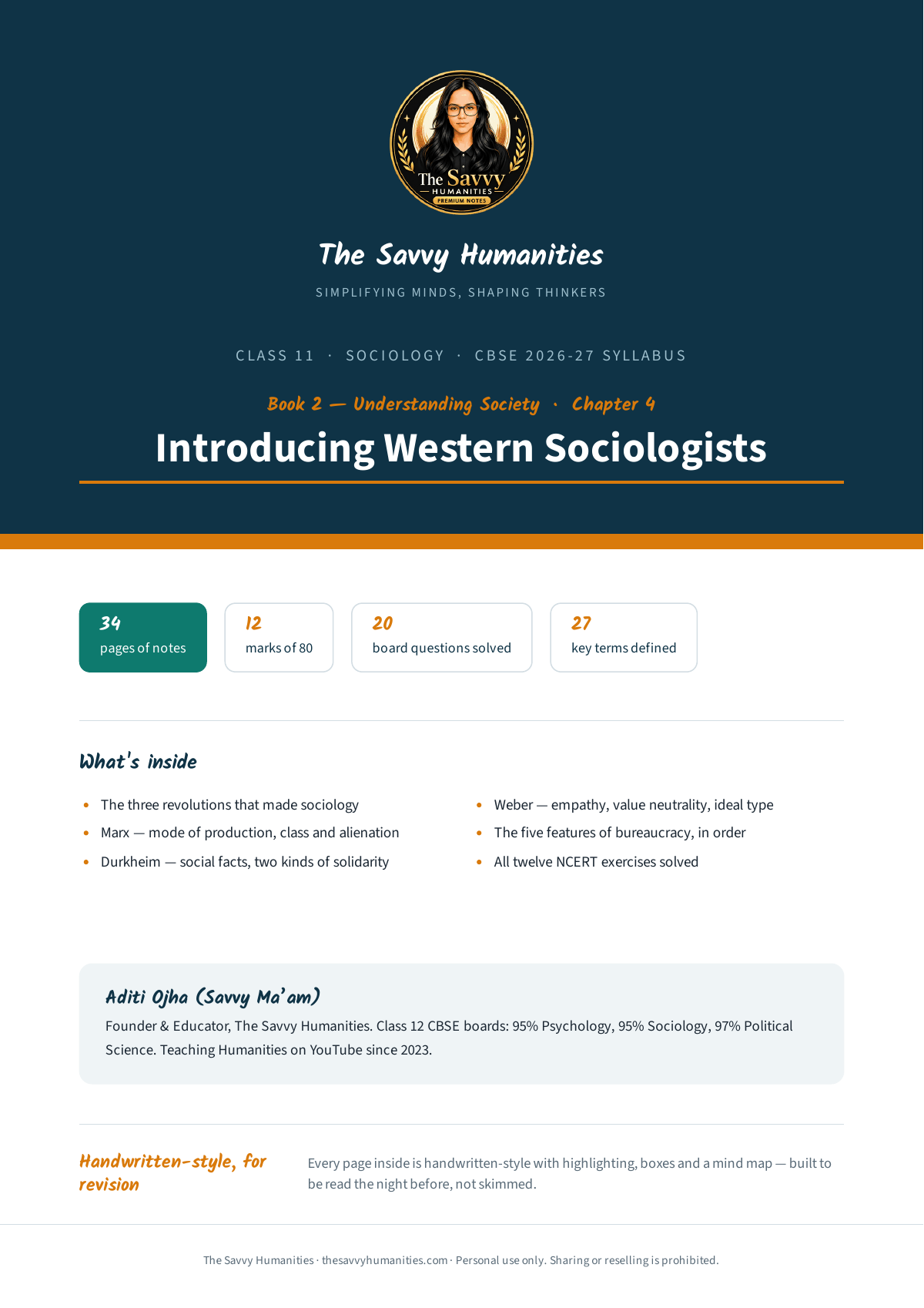
Exam-oriented handwritten-style notes — every page laid out like class notes, with highlighting, boxes and a mind map, built to be read the night before rather than skimmed.
Unit 9 of the CBSE Class 11 Sociology paper carries 12 marks out of 80. CBSE lists four sub-topics: the context sociology was born in, then Karl Marx, Emile Durkheim and Max Weber.
Which three revolutions gave birth to sociology?
The Enlightenment, the French Revolution and the Industrial Revolution — what each changed, and why sociology needed all three.
What are Karl Marx’s main ideas?
The mode of production, class and class struggle, and alienation — each in the chapter’s own terms.
What did Emile Durkheim mean by social facts and solidarity?
Social facts are ways of acting that exist outside the individual and constrain them. Durkheim’s mechanical and organic solidarity are compared side by side.
What are Max Weber’s key ideas?
Empathetic understanding, value neutrality and the ideal type, then the five features of bureaucracy in the order the book gives them.
What else is in the file
- Chapter at a glance — a one-page mind map of the whole chapter
- A 27-term glossary of every definition the paper can ask for
- 20 questions solved with full model answers — board-pattern MCQs, passage-based and long answers (including all twelve NCERT exercises), 1, 2, 4 and 6 markers
- A revision tracker to tick off each topic as read, practised and revised
The file
- Format: PDF, A4 — works on a phone and prints cleanly
- Length: 34 pages plus cover
- Delivery: instant download link after payment, plus a copy by email
- Free updates: if CBSE changes the syllabus or a correction goes in, the updated file is sent to you at no cost. You never pay twice for the same chapter.
By Aditi Ojha (Savvy Ma’am) — Founder and educator, The Savvy Humanities. Teaching Humanities on YouTube since 2023. These notes pair with the free chapter videos; QR codes inside the file link to them.